
- It’s a strange world out there when you have no idea what you’re witnessing.
It’s so easy to learn about foreign peoples and cultures these days. You can read first-hand descriptions in books or on the internet, watch endless videos about far-off places, and even see them yourself on Street View.
Back in the day, traveling to distant lands was both a luxury and a dangerous undertaking that few could do. So, when someone came back from abroad, everyone would want to hear the stories about people living in other parts of the world.
And those stories could be… Imaginative, shall we say.
Here are 10 bizarre peoples, tribes, and races that ancient explorers swore lived somewhere in the world. Seriously. You’ll just never travel there to see them.
1. Troglodytes
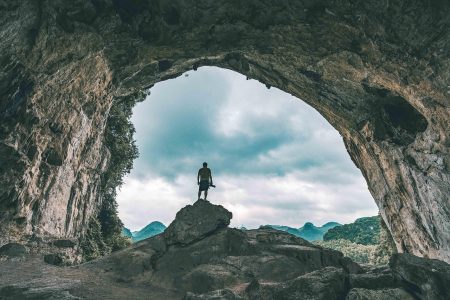
The Troglodytes were a strange people described by the ancient Greek historian Herodotus. According to him, they lived on the borderlands between Egypt and Ethiopia and were very fast runners.
And that was the nicest thing he had to say about them. Herodotus claimed that the Troglodytes shunned civilization and lived in deep caves.
They didn’t know language, communicating in bat-like squeals, and they ate only lizards and snakes. Frankly, Herodotus likely wrote down an extremely prejudiced view of some African native people.
2. Blemmyes
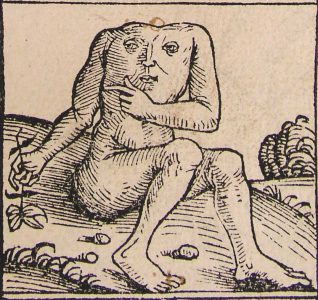
The Blemmyes, also known as akephaloi, were a folk that has been described as living in parts unknown throughout human history. Their defining feature was that they had no heads, with their facial features instead jutting out of their chests.
The first mention of Blemmyes comes again from Herodotus. However, various other travelers and historians have claimed to have seen Blemmyes all over the world.
One of the last references to Blemmyes comes from 16th-century English explorer Sir Walter Raleigh. He claimed to have seen headless “Ewaipanoma” people living somewhere in modern Venezuela.
3. Cynocephali
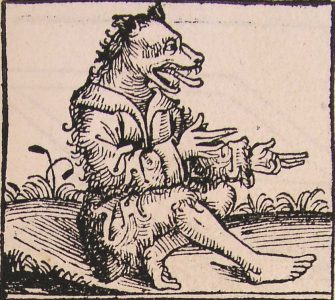
Whereas Blemmyes had no heads, the Cynocephali had dogs’ heads. These dog-headed people are attested by many explorers, from ancient Greek doctor and traveler Ctesias to Marco Polo himself. Even Columbus claims the Taino Native Americans were familiar with Cynocephali.
Most of the accounts place the Cynocephali somewhere in India or Southeast Asia. In the majority of stories, they are more or less savage and barbaric, often understanding speech but being unable to speak themselves. Yet, in some accounts, they had a very rich and respectable kingdom.
4. Sciapods
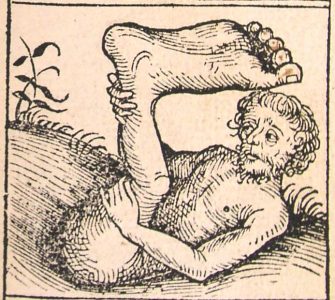
Sciapods, also called monopods, are another folk that Ctesias supposedly met on his Indian travels. What makes them strange is their single leg and a huge foot.
The sciapods were reportedly so agile with their single foot that regular two-legged people struggled to catch them. Yet, they had another, much more ingenious use for their appendage.
If the weather got too hot, the sciapods would lie on their back and raise their ginormous foot up in the air. And there you go — a makeshift parasol!
5. Abarimon
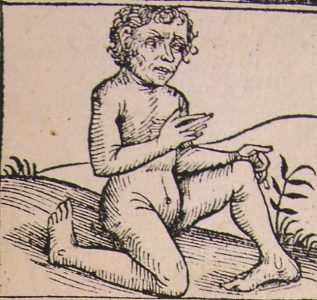
The Abarimon are a “majestic tribe” that lived in a secluded valley in India, claimed Roman writer Pliny the Elder. Unlike the sciapods, the Abarimon have two legs, but their feet and knees point behind them.
Despite the oddity, the Abarimon were able to run at incredible speeds. They were also ferocious fighters who would battle anyone trying to take them away from their home valley.
One reason for that was the valley’s special air. After breathing it for so long, the Abarimon would suffocate if they were to breathe the air of any other place.
And that’s why Pliny can’t bring an Abarimon to Rome to show anyone. How convenient.
6. Panotti
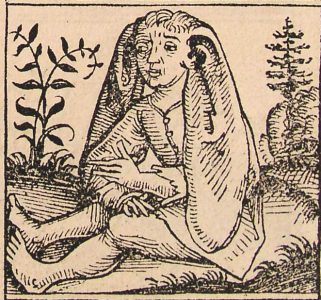
What do you get if you cross a human with a rabbit? Well, according to Pliny the Elder, the result would look something like the Panotti.
These people had ears so long that they drooped down to their ankles. They came in useful, though, as on cold nights, the Panotti could wrap themselves in their ears like a blanket.
Pliny claimed that the Panotti lived on an island somewhere in the Black Sea. And the name of that island? It was called “All-ears Island.”
Are we sure Pliny wasn’t just yanking people’s chains with his writing?
7. Arimaspi
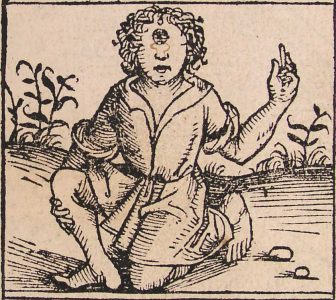
We’re all familiar with the cyclops, the most famous one-eyed guy from Greek mythology. But the Greeks also knew of the Arimaspi, another monocular people living in eastern Europe.
These people were described by poet Aristeas, who’d heard of them from travelers. There doesn’t seem to be anything particularly special about the Arimaspi, outside of them having only one eye in the middle of their faces.
They were warlike, though. Aristeas claims that the Arimaspi are at constant war with their neighboring tribes (for some unspecified reason).
8. Machlyes
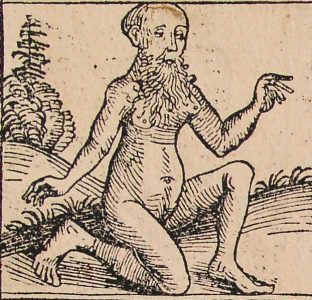
In ancient Libya lived the Machlyes, or Machlyans. These bizarre people were hermaphroditic, according to Pliny the Elder.
A Machlyan would have male characteristics on one half and female ones on the other. The split ran vertically down the middle of their bodies.
Curiously, though, our friend Herodotus also mentioned the Machlyes, but he didn’t claim there was anything weird about their appearance. The only noteworthy thing was that their women waged ritual battles against women from neighboring tribes to prove their virtue.
Could it be that Pliny assumed that any women participating in warfare, a masculine endeavor in ancient Rome, just had to be half man?
9. Astomi
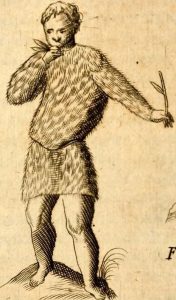
India was one strange place, according to ancient Greeks and Romans. Megasthenes, yet another Greek historian, claimed that a mouthless people called Astomi inhabited the estuary of the river Ganges.
Not having a mouth must make eating difficult, right? It would, but luckily, the Astomi didn’t have to eat. They subsisted entirely on smells and “ate” by sniffing fragrant things, like fruit, flowers, and roots.
They had to be careful about what they smelled, though. Their noses were so keen that a whiff of something strong or unpleasant could kill them on the spot.
10. Nuren Guo

Around 450, Chinese missionary Huishen sailed east to lands unknown. Some 40 years later, he returned with fantastic tales about peaceful and rich kingdoms in what is now considered to be either some Pacific island, northeast Asia, or western North or South America.
But the strangest kingdom of them all was Nuren Guo. The inhabitants of this realm were all women with beautiful faces but hair-covered bodies.
They would run and hide at the sight of any men. When one of the women wanted to have a child, she would wade into water and wait until a baby was conceived.
The Nuren Guo women had no nipples for feeding the babies. Instead, special hairs oozing a “juice” grew on their necks, and babies would drink the juice for 100 days until they could walk.
Oh, and one grown up, they liked eating pungent pickled vegetables.