
- If all else fails, you can always blame the kids.
Those darn no-good kids! Get off my lawn, pull yourselves up by your bootstraps, and get a job! Why, back in my day…
You might think that today’s youth are rotten to the core. All they do is laze around with their TikToks and listen to their hip-hops, with no clue about proper manners.
But what if I told you that people have felt that way about kids always, as long as there have been kids? It’s true, and preserved historical documents can prove it.
Here are 10 things from the past that crotchety old-timers blamed for ruining the kids and society.
1. Writing (360 BCE)

To really drive home how old a concept complaining about kids and their toys is, they already did it in Ancient Greece. And it wasn’t just any old coot doing the complaining – it was Plato himself.
In his work Phaedrus, Plato presents a dialogue in which Socrates speaks to the king Phaedrus. He states that if all the kids learn to write, they will no longer be able to commit anything to memory. What’s worse, they’ll all think they’re so smart for being able to write, yet all they’ll produce are inane platitudes.
Huh. Actually, it seems Plato foretold social media.
2. Using Poor Grammar (10th Century)

By the medieval period, the concern had shifted. Kids (or at least those fortunate enough to get an education) were speaking Latin as civilized people did, but they were doing it WRONG.
Many a monk and teacher of the period bemoaned the poor and incorrect Latin that their students were using. Funnily enough, though, those “errors” eventually branched into the modern Romance languages, such as French and Spanish.
It wasn’t just Latin where this happened. In 1440, an English historian named Bokenham wrote a rant about youth using French terms to appear more educated. Considering how much modern English owes to French, he was tilting at windmills.
3. Reading Anything (15th Century)

Alright, the kids can write and learn the classical tongues, but they shouldn’t read too much. Oh, look, some German called Gutenberg just invented the printing press!
With that, the availability of pamphlets, posters, books, and other printed materials exploded. Moral guardians of the day were outraged at kids getting exposed to dangerous ideas through easily reproducible texts.
After all, affording books was a mark of the elite. Those dang kids just didn’t know their place!
4. Reading Novels (Late 1700s)

Hop forward 200 years, and society had accepted the benefits of the printing press and readily available text materials. But youths had found a new, dastardly thing to waste their time on: novels.
After all, unlike religious or political texts, novels were nothing but imagination. Reading fictional stories would make the kids lazy, corrupt their morals, and even drive them to insanity and suicide.
Wonder what novels they were reading at the time. Sounds like a hoot.
5. Dancing the Waltz (Early 1800s)
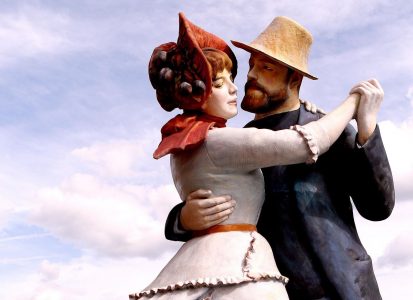
These days, dancing the waltz with someone is typically seen as elegant and sophisticated, if old-fashioned. In the early 19th century, however, it was a horrible, new-fangled fad of the kids.
This outrageous dance encouraged close physical contact between the dancers. Why, that will only encourage indecent and morally degraded behavior – especially in young women!
6. Reading Dime Novels (Late 1800s)

Fine, fine, novels can be enlightening and even educational. But by the 19th century, however, kids had swapped to reading dime novels, penny dreadfuls, and whatever else you might call them.
These stories weren’t exactly highbrow. They were sold at corner stores for low prices and often featured high-flying adventure with exotic locations, brave heroes, terrifying monsters, and plenty of damsels in distress.
If you read some of these novels (and you should, they’re kind of fun), you’ll probably just chuckle at their childishness. But at the time, they were seen as a definite sign that the kids didn’t want to read real literature anywhere and were utterly ruined.
7. Listening to Jazz (1910s-1920s)

Jazz music hit the scene in the 1910s and would come to define the Roaring Twenties. But, oh boy, was everyone not okay with it.
Among its detractors, jazz was seen as “vulgar, filthy, and suggestive” music. Not words you’d associate with it today, but at the time, some people were convinced that jazz would destroy society. That wasn’t least because jazz shows attracted white and black people alike.
The jazz scare got so insane that one Washington state congressman introduced a bill that would’ve allowed the “jazzily intoxicated” to be sent to mental asylums. The bill didn’t pass, but it illustrates well what people thought kids would become if they got into jazz.
8. Reading Comic Books (1950s)

It’s a new century, so the kids have again come up with a new thing to read and rot their brains with. In the 1950s, that was comic books.
People grew so concerned about kids and their picture books – especially horror-themed ones – that U.S. Congress had to step in. Following congressional hearings against juvenile delinquency, comic book publishers set up the Comics Code Authority, a self-censorship organization to keep comics squeaky clean.
The CCA became defunct only in 2011.
9. Playing Video Games (1990s)

Video games weren’t invented in the ‘90s, and the first video game craze already happened a decade earlier. However, by the mid-1990s, video game graphics had become advanced enough that you weren’t playing around with abstract shapes anymore.
And what wonders did the kids see on their screens. Extreme violence, sexual content, and foul language – oh my!
Now, there are absolutely video games that children have no business playing. But the video games of the 1990s were supposed to completely destroy kids’ moral fiber, which I don’t think happened.
10. Not Reading Enough (2000s Onward)

As you’ve seen on the list, humanity has railed against kids reading since the dawn of time. But now, there’s a new concern – they’re not reading enough.
The concern over falling reading rates and the associated drop in media literacy and reading comprehension has prompted many to declare that the end times are at hand. Soon enough, we’ll degrade back into a medieval society where the literate elite rule over ignorant peasants.
At which point, I suppose, we’ll start complaining about kids reading too much again.
In conclusion, the darn kids just can’t do anything right.