
- It doesn’t matter how vile you get if it keeps you from becoming someone else’s dinner.
It’s a tough world for animals out there. In most cases, there’s somebody who wants to eat you.
So, you have to discourage your predators from eating you. You could be toxic, spiky, or smell so terrible that no creature in its right mind wants to be anywhere near you.
Or you fire a flamethrower, a cloud of technicolor mucus, or a shower of rotten meat at your assailant. That works too.
Here are seven animals who have gotten particularly creative (and gross) with their self-defense methods.
1. Becoming a Peanut
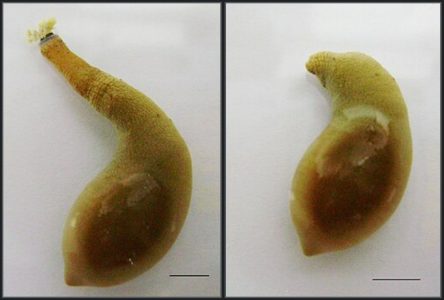
You’ve probably never seen a peanut worm, considering they’re bottom-dwelling marine creatures. If you did see one, though, you might wonder about its name, as the thing looks nothing like a peanut.
Until you threaten it, that is.
A peanut worm’s body consists of two parts: the trunk and the introvert. The trunk is its torso, if you will, and the introvert is a long, flexible mouth-tipped tube that extends out of the trunk.
If a threat approaches, the peanut worm can suck its introvert inside the trunk, becoming much more difficult for predators to pick up. When retracted, the brownish worm looks much like a peanut.
Hence the name.
2. Firing a Flamethrower
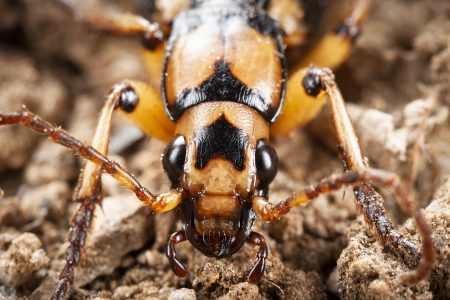
Many animals can squirt something nasty at predators. But the bombardier beetle has perhaps the nastiest projectile weapon of them all – it carries a natural flamethrower.
The bombardier beetle has a special gland in its body that’s filled with a mixture of hydroquinone and hydrogen peroxide. If the bug decides it’d like you to leave it alone, it can squirt the chemical cocktail at you through its rear end.
As the chemicals leave the beetle’s body, they rapidly decompose, creating noxious gases and extreme heat well beyond the water’s boiling point. The scorching liquid is strong enough to incinerate most insects instantly, and even small mammals may die from the horrendous burns it may cause.
3. Vomiting Decayed Meat
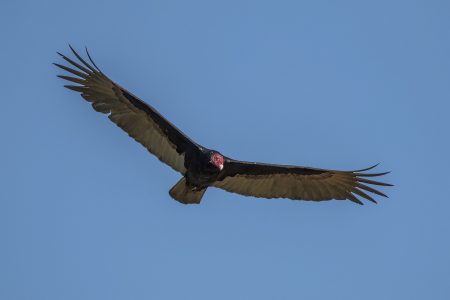
Actually, I take back what I just said. The bombardier beetle does not have the nastiest projectile weapon of them all. The turkey vulture does.
Although this large bird doesn’t have many predators going after it, foxes and other similarly-sized carnivores may threaten the vulture’s nests. If the mama bird notices an enemy getting close to her babies, she will throw up.
That’s not a panic reaction, though. The vulture very deliberately vomits its stomach contents on the intruder. And since it is a vulture, its belly is full of semi-digested carrion and ridiculously strong stomach acid.
It’s hard to tell what ultimately drives the vulture’s enemy away. It might be the revolting stench of rotten meat, the burning acid, or the humiliation of getting puked on.
4. Squirting Disco Mucus
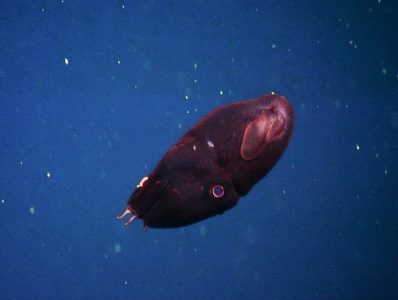
Squids are famous for squirting clouds of black ink at predators to blind them while the squid escapes. However, the vampire squid has found out that this tactic doesn’t work for it. It lives in the lightless depths of the ocean, where an ink cloud doesn’t really do much to reduce the already nonexistent visibility.
So, the vampire squid has opted for the opposite approach. Instead of concealing ink, it launches a dazzling rainbow at its foes.
When threatened, the vampire squid pulls its tentacles up over its body, essentially turning itself inside out. It then secretes bioluminescent mucus from the undersides of its tentacles.
While its opponent grapples with the glowing snot, the squid disappears silently into the oceanic void.
5. Shedding Your Flesh
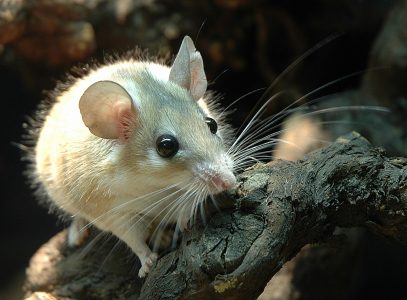
Most prey animals would prefer their assailants not to take a bit out of them. The spiny mouse, however, freely serves hors d’oeuvres of its own flesh.
Should a predator catch the mouse, it will allow a part of its skin to slough off. That will serve as enough of a distraction for the now-mutilated mouse to safely run away.
But the spiny mouse doesn’t care that a chunk of its body just fell off. The mouse will regenerate the damage very quickly, regrowing skin, hair follicles, and sweat glands without scarring.
6. Calling a Bigger Fish
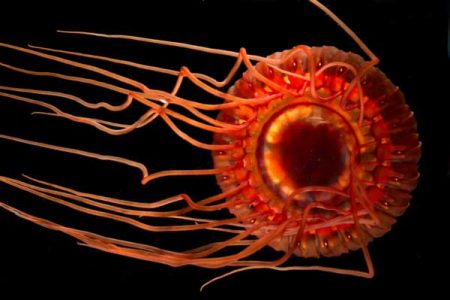
You know the saying, “There’s always a bigger fish.” That principle is the foundation of the deep-sea Atolla jellyfish’s defensive strategy.
If a predator attacks the Atolla jellyfish, it will turn on the fireworks. The gelatinous creature lights up with a swirling, rotating pattern of lights that pulses through its bell and tentacles.
You’d imagine that’d only make the jellyfish an easier target in the dark depths, and it does. In fact, the jellyfish counts on it.
By lighting up like the Fourth of July, the Atolla jellyfish attracts the attention of every predator in its general vicinity. That includes large predators that will not care about the jelly – but they would gladly eat whoever’s harassing the jellyfish.
It probably doesn’t surprise you that the Atolla jellyfish is also known as the alarm jellyfish.
7. Being Indestructible
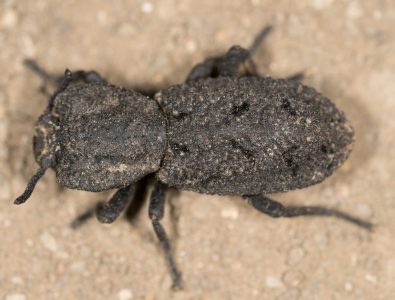
One of the best ways to avoid being eaten is to have a hard protective shell. And you can’t get much harder than the diabolical ironclad beetle.
This inch-long fungus-eating beetle is one of the toughest customers out there. Its shell is possibly the hardest of all insects, being able to withstand forces in excess of 39,000 times the beetle’s body weight.
That number probably doesn’t mean anything to you, so here’s a practical example. The ironclad beetle’s shell is so tough that you can run a car over it and it doesn’t care.
We know this because researchers did just that. In the name of science, they immobilized an ironclad beetle to the ground and ran it over.
After being released from its bonds, the beetle crawled away unharmed – although I bet it wasn’t particularly happy with the scientists.