
- Have you ever read 1984?
Do you know about the book 1984? At this point in time, it’s literal history but back then, people had thoughts.
- Some readers thought Orwell was predicting 1984 literally. The title was so specific that people sometimes treated the novel almost like a forecast rather than a warning about political tendencies.
- The year 1984 sounded impossibly futuristic. To someone in 1949, 1984 was 35 years away—roughly as far away as 2061 feels from today. It sounded like science fiction.
- People worried that televisions would become surveillance devices. Orwell’s
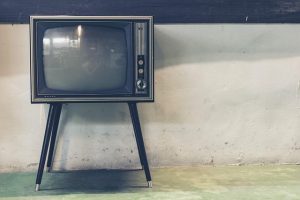 telescreens both broadcast propaganda and watch citizens, making television seem potentially terrifying rather than merely entertaining.
 - The idea of being watched inside your own home freaked people out. The terrifying part wasn’t simply government surveillance—it was the possibility that privacy could disappear completely.
- “Big Brother” became a genuine political fear. The phrase eventually entered everyday language as shorthand for governments, corporations, and institutions monitoring ordinary people. Did you know this about the book 1984?
- Some people feared the novel was describing the future of Britain. Britain had recently experienced wartime rationing, government controls, propaganda, and surveillance, so Orwell’s dystopia didn’t feel completely alien.
- Others thought Orwell was exaggerating wildly. Critics argued that democratic societies had safeguards that would prevent Britain or America from becoming Oceania.
- Some readers interpreted the book as an attack on communism. This interpretation became especially prominent during the Cold War because Orwell portrayed an authoritarian socialist regime controlling virtually every aspect of life.
- Others argued that it was also a warning about capitalism and political power. Orwell’s target was broader than one particular government system: concentrated power and manipulation were central concerns.
- People became fascinated by Newspeak. The idea that controlling vocabulary could influence what people are capable of thinking seemed bizarre—and disturbingly plausible. Did you know this about the book 1984?

- “Thoughtcrime” became a real-world expression. People began using the term sarcastically whenever governments, schools, employers, or societies appeared to punish people for opinions rather than actions.
- Some feared dictionaries could become political weapons. Orwell imagined authorities deliberately shrinking language so certain concepts would become difficult or impossible to express.
- The idea of rewriting history terrified readers. Winston’s job—altering old newspaper records so the past always agrees with the present—made propaganda feel much more sinister.
- People wondered whether objective history could actually exist. If governments controlled newspapers, archives, photographs, and education, what would stop them from changing people’s understanding of the past? Did you know this about the book 1984?
- “2 + 2 = 5” became one of the book’s most famous ideas. The horrifying point wasn’t arithmetic—it was whether an authority could force someone to accept an obvious falsehood.
- Some readers thought mass media could create its own reality. Orwell’s fictional world made people question whether constantly repeated propaganda could eventually overpower personal experience.
- The book made ordinary cameras seem creepy. Anything capable of recording people could suddenly be imagined as an instrument of Big Brother.
- People joked that 1984 would arrive with everyone wearing uniforms. When the actual year arrived, many were surprised that dystopia looked much more ordinary than expected.
- 1984 became a measuring stick for political arguments. Politicians, journalists, activists, and ordinary citizens began calling policies “Orwellian” when they believed authorities were becoming excessively controlling. Did you know this about the book 1984?
- And here’s the wildest part: when the real year 1984 finally arrived, the world hadn’t become Oceania. There was no Big Brother ruling the planet—but the book’s warnings about propaganda, surveillance, political language, and manipulation still felt uncomfortably relevant.
- Orwell himself wasn’t trying to predict a specific calendar year. The title was a warning about where certain political and technological trends could lead—not a promise that London would literally become Oceania on January 1, 1984.
- The title’s exact origin is still debated. One possibility is that Orwell reversed
 the last two digits of 1948, the year he was finishing the manuscript, creating 1984.
 - The irony became almost unavoidable. A novel about controlling information became one of the most influential books ever written about information control—and its title became part of the language it was warning people to protect.
What do you think of these thoughts about the book 1984? Tell us all about it in the comments!