
- Did you know that someone once literally stole another man’s thunder?
Every day, we use phrases and sayings whose meanings we take for granted. They might sound a little odd if you think about them, but everybody knows what you’re trying to say.
Start digging deeper, though, and you might find that we say the darndest things – at least if you consider some common phrases’ origins. They might be outlandish, refer to old uncomfortable cultural norms, or be horrifyingly gruesome.
Here are 10 examples of everyday sayings and phrases with unusual origins.
1. Pull Out All the Stops
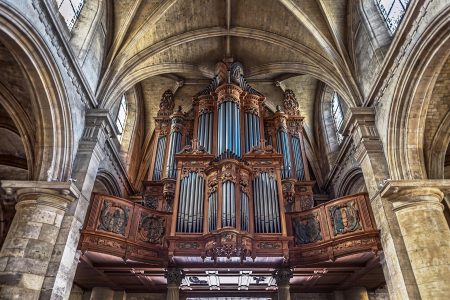
When it’s time to give your best effort, you pull out all the stops. Surprisingly, this saying comes from the church or any other place where you might play a pipe organ.
Pipe organs used to (and probably still do) have blockers in the pipes called stops to limit airflow and consequently maximum volume. But if you have to play as loud as possible, you pull out the stops, allowing air to flow freely and the organ to blare.
2. Steal Someone’s Thunder

The phrase “stealing someone’s thunder” has a shockingly literal origin. After all, someone actually stole English playwright John Dennis’ thunder.
Specifically, Dennis had invented a new effect to create realistic thunderclaps on stage. He used it for his 1709 play Appius and Virginia, which sadly failed to attract an audience.
However, when Dennis was passing a production of Macbeth at a London theater, he heard a very familiar sound. Rushing backstage, he discovered that a competing dramatist had attended Dennis’ play and blatantly stolen the design for his thunder machine.
“That is my thunder, by God; the villains will play my thunder, but not my plays,” Dennis reportedly exclaimed.
3. White Elephant
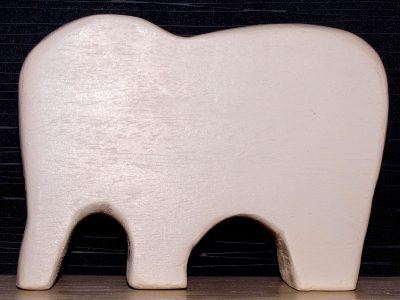
A white elephant is a gift that’s more trouble than worth for the recipient. This phrase comes from the literal sacred white elephants that ancient Thai kings used to present to their favorites.
Receiving the elephant was an incredible honor. However, it was also a holy beast, and you were now forced to pay for first-class care for the divine animal.
And let me tell you, caring for an elephant isn’t cheap.
4. Close but No Cigar

Ever wondered why near misses result in you not being able to puff on a cigar? To find the answer, we have to travel back to an American fairground in the late 19th century.
At the time, cigars were a common prize in many carnival games, being a cheap but sufficiently fancy thing to hand out. So, if the player almost hit the jackpot but not quite, the vendor would add insult to injury by reminding them of the cigar they just missed out on.
5. Basket Case
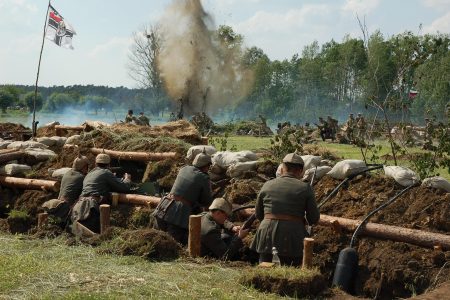
These days, “basket case” is a derogatory term for someone incapacitated by a difficult illness, usually a mental one. Its origins, however, are much more gruesome, coming from the trenches of World War I.
According to rumors, soldiers were getting all their limbs blown off in the endless artillery barrages. These living torsos were then dragged away from the front in baskets, stretchers, or anything else that could hold them.
The phrase originated in America to describe Doughboys coming home limbless from the war. Fortunately, U.S. War Department casualty records from the time don’t list anyone losing all their limbs (and living), but the story was vivid enough to catch on.
6. Deadline
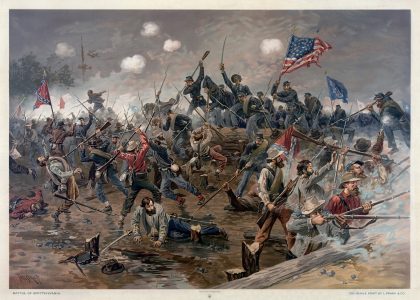
“Deadline” is another phrase whose origins lie in warfare, particularly the American Civil War. To prevent prisoners of war escaping, prison guards on both sides would designate an imaginary line a few feet from the prison camps’ walls.
If a prisoner crossed this “dead line,” the guards were ordered to assume he was attempting to escape and were free to shoot him dead. Over time, the phrase transferred first to the printing business and then to general usage.
I don’t know about you, but I’m glad the meaning changed. I’d much rather turn an assignment in late than get shot.
7. Diehard
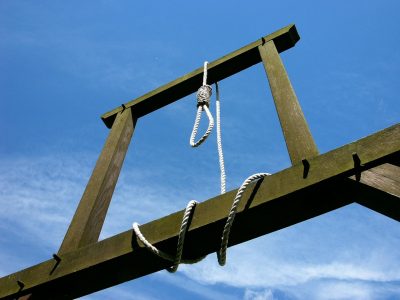
A diehard is somebody who will stand their ground and not relent on whatever it is they believe in. Originally, though, it described someone who chose to be executed in a slow and horrible manner.
In the 1700s, when a criminal was sentenced to be hanged, they didn’t use the famous trapdoor that put a mercifully quick stop to a human life. Instead, the victims were dragged up by the rope, often hanging for minutes as they kicked and choked to death.
As such, many would pay someone to pull their legs down to hasten their demise. “Diehards,” however, chose to suffocate slowly and painfully (possibly because they couldn’t afford to pay for mercy).
8. Cakewalk
Today, a cakewalk is an easy task with a nice reward at the end. But when the phrase first emerged, it was a specific dance that Black people enslaved on American plantations would do to covertly mock their masters.
Occasionally, the plantation owners would see their slaves dancing – and they enjoyed the jig. So, they’d invite the dancer to perform at a dinner party taking place that evening, or something along those lines. As a reward, the dancer would get something nice to eat as well.
To the slaves, that sounded amazing. You get a decent meal for just dancing for a while, and you get to secretly poke fun at your enslaver? Heck yeah!
9. Run Amok
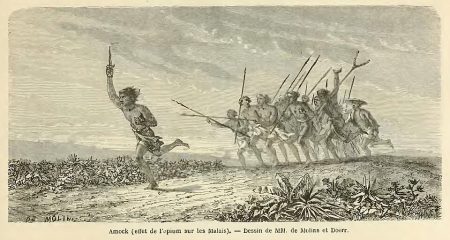
A person running amok is going wild; they’re off the handle in some way. But the first people to run amok were doing it in much more brutal ways than what we think of today.
“Run amok” comes from a Malay word “amuk” which described a specific mental affliction in Malay society in the 17th century, particularly among the warrior class. A man experiencing “amuk” (and it was virtually always a man) would brood for days, fixating on a slight or insult inflicted on him.
Finally, he would explode in a berserk rage, grab a weapon, and run to the street. He wouldn’t stop until he’d slaughtered the target of his obsession – and anyone else standing in his way.
10. By and Large

To find the origin of the phrase “by and large,” you’ll have to take to the sea. In the age of sail, both components of this phrase referred to specific wind conditions.
A ship sailing “large” had the wind at its back, filling its sails and making for easy travel. On the opposite side of the coin, a ship sailing “by” meant the ship was traveling against the wind, making little to no progress.
Sailing “by and large,” then, meant prowling the seas in all directions without a destination, possibly looking for schools of fish, whales, or enemy ships. But how did this phrase come to mean “for the most part” or something similar?
Who knows.
Want more stories like this? Check out our list of 11 Weird Origins of Common Phrases and Sayings.