
- Some people will do or say anything to get ahead.
Everybody loves a good story about con artists, as long as they don’t have to actively be a part of it. And admittedly, a tale of a thorough swindle can be entertaining.
Some cons, however, are so out there that it’s hard to believe they’re true. They’re either so incredibly convoluted, strange, or just so evil that they seem improbable.
Yet, they are true. Here are seven examples of some of the most outrageous con artists ever.
1. Charles Ponzi

If we’re talking about famous con men, we have to start with the most famous of them all. Charles Ponzi is the reason Ponzi schemes are called Ponzi schemes.
Born in Italy, Carlo Ponzi (as he was christened) ran his famous con in the 1920s. He promised wealthy investors that he could double their investment in only 90 days, an offer they could not resist.
And what was Ponzi’s business? Well, he didn’t really have one. He had planned to buy discounted mailing coupons from Europe and redeem them at higher prices in the U.S., but the harebrained scheme never panned out in reality.
Some of his investors really did make their money back – because Ponzi paid them with investments received from others. He squandered the rest of the cash to live luxuriously for about a year before his con fell through and he went to prison.
2. Hollywood Con Queen

The Hollywood Con Queen is ironically named, as the scammer is widely believed to actually be Hargobind Tahilramani, an Indonesian man. However, over his multi-year con in the 2010s, he often impersonated female Hollywood bigwigs, like Amy Pascal and Kathleen Kennedy.
Tahilramani invited aspiring Hollywood actors, videographers, and other professionals to Indonesia, promising them a place in a potential breakthrough production. However, once the victim arrived, they would be endlessly driven around by an expensive chauffeur to meetings that always got canceled at the last minute.
The victim always had to pay the driver’s fees, with a promise of later reimbursement. Plot twist: after the frustrated victim flew home, they would never get reimbursed.
In 2020, Tahilramani was arrested in the U.K. Following a long legal battle against extradition to the U.S., he lost his case in 2025 and is now expected to show up in an American court… At some point.
3. Victor Lustig

Victor Lustig has gone down in history as the man who sold the Eiffel Tower twice. In reality, though, he never sold it even once, although he made a lot of money from it.
In the 1920s, the Eiffel Tower was in terrible condition and in danger of straight-up collapsing. Lustig decided to take advantage of its deteriorated state. Impersonating a French government official, he started contacting scrap iron dealers and asking them for bids to demolish the famous tower.
Of course, it would be awfully expensive to bid for the project by the book. But tell you what? For a small bribe, Lustig could ensure the briber got the job.
Counting on the victims being too embarrassed to sic the police on him, Lustig pulled the scam off twice. On the second attempt, however, the law caught up to him, and he escaped to America.
4. Julia Lyons

In 1918, the Spanish Flu pandemic was ravaging Chicago, and the city was in desperate need of nurses. Selflessly, Julia Lyons volunteered to take care of homebound patients too sick to leave their beds.
Only, she wasn’t a medical professional of any kind. She simply said she was a nurse and, due to the desperate lack of staff, hospitals took her at her word.
But why did Lyons do that? To steal anything of any value from the sick people’s homes, of course.
In addition to stealing cash, jewelry, and other valuables, Lyons would fill cheap prescriptions and tell the victim they cost a lot more, pocketing the change. Ultimately, she was caught and sent to prison.
5. Carlos Kaiser

Carlos Kaiser was a Brazilian star soccer player who had a decades-spanning career between the ‘70s and ‘90s. That’s curious, considering he never stepped on the field or even knew how to play football.
Kaiser was an athletic man built like a soccer player, but quite frankly, he sucked at the sport. However, he befriended many real soccer stars, who believed his made-up stories of playing for foreign teams.
He also spun a yarn to journalists about his exploits, so they wrote stories about big wins that never happened. With this unlikely support network, Kaiser got himself hired by one team after another.
His stints in the teams were never long, as he always happened to injure himself during his first training session, spending the rest of his contract recuperating. Once, he was almost put on the field, but he started a brawl with fans and got a red card before he had to show his nonexistent skills.
When not pretending to know how to play, Kaiser would party and live it up like a real sports star. No soccer team has hired him since 1991.
6. John Brinkley
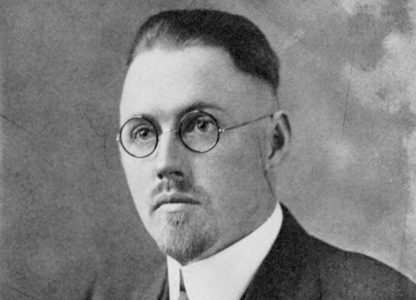
Unlike Julie Lyons from earlier, John Brinkley had a medical degree. It was purchased from a degree mill and was worth zilch, but at least he had a paper.
With that degree, Brinkley was able to perform miraculous surgical operations that he claimed would restore impotent men’s potency and virility. This unusual treatment consisted of implanting goat testicles into the men’s bodies.
I wish I was making this up.
Between 1920 and 1940, Brinkley performed an undetermined number of operations, for which the patients paid $750 (more than $12,000 in modern money). Naturally, none of the procedures did anything for the patient’s condition. What’s more, an unknown number of patients died from infections after Brinkley destroyed their testicles in an unsanitary operating room while drunk.
Ultimately, his quackery was revealed, and he went bankrupt in subsequent malpractice lawsuits.
Oh, and he was a Nazi. What a wonderful man.
7. Gregor MacGregor

Gregor MacGregor was a lot of things. This 19th-century Scotsman was a soldier, adventurer, charlatan – and the ruler of the Central American country of Poyais.
Well, that last thing he just claimed to be. He did so to secure investments and sell land certificates to people looking to relocate to his tropical paradise.
And people did. An estimated 250 people emigrated from Europe to “Poyais,” only to find nothing but undeveloped jungle.
Of those 250 unfortunates, roughly half died after traveling to “Poyais.”
Unfortunately, I can’t say MacGregor got his comeuppance. In 1826, he was arrested and tried, but the courts acquitted him and MacGregor continued selling nonexistent Poyaisian government bonds.