
- Light up a banana peel and lean back buck naked as you gaze at a beautiful nuclear explosion.
Fads and brief trends can spread more easily than ever these days, thanks to social media being everywhere. But people participating in ridiculous fads is not a new thing at all.
In fact, it’s a tale as old as time.
We have plenty of historical evidence that folks have always been roped into outlandish fads. Whether we go back 20, 200, or 2,000 years, very little has changed in that regard.
Here are 7 odd fads and trends from the ages gone by. Maybe you’ll remember some of them.
1. Visards
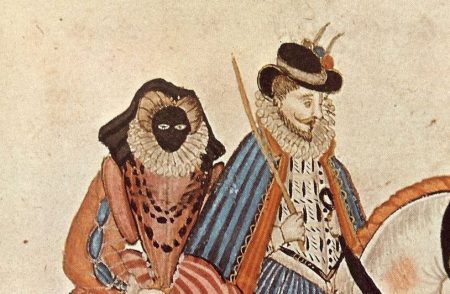
If you came across a traveling noblewoman in 16th- to 18th-century Europe, you might be a little scared. After all, the lady may just be wearing a pitch-black, featureless mask, hiding her entire face.
This frankly terrifying thing is called a visard or vizard. In the days before sunscreen, its purpose was to protect the wearer’s face from the sun.
Not that the ladies of the time were interested in that for health reasons, though. They wanted to keep their faces deathly pale because having a tan suggested you had to go outside.
You know, like a poor person. Like a filthy peasant. That’s just gross.
For more strange historical skincare tips, check out our list of 9 bizarre (and horrifying) beauty trends from the past.
2. Streaking
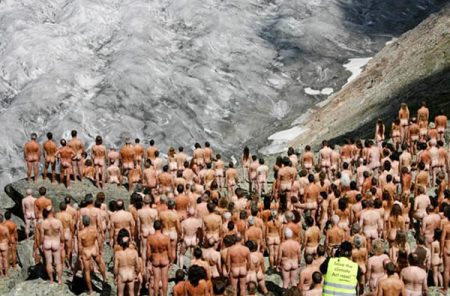
In the early 1970s, the hippie movement had started showing signs of fizzling out, but its message of free love and bodily autonomy was still going strong. That may have been part of the reason streaking briefly became a thing.
If you don’t know what streaking is, it’s the act of running around outside naked. Yes, it was generally frowned upon, and yes, it was illegal. But for a few years it was so popular that mainstream artists wrote songs about it, like Ray Stevens’ “The Streak.”
Yet, nowhere was streaking more popular than at the University of Georgia. In an attempt to be ever more outrageous, the school’s streaking culture culminated in the 1974 gathering of 1,500 people without a thread on their bodies.
Some people even parachuted to the campus naked.
3. Banana Smoking

Since we’re talking about the hippies, they were known for always trying to, like, expand their minds, man. In their quest to peek beyond the bounds of reality, some of them were ready to smoke or ingest pretty much anything—including banana peels.
For a brief period in the late ‘60s, hippies smoked banana peels. They were attempting to puff on some of that sweet “bananadine” that would get them stoned out of their skulls.
If that sounds ridiculous, that’s because it is. Bananadine doesn’t exist, and the whole banana smoking fad started with a satirical magazine article about hippies’ penchant for drugs.
Some of them claimed they did get high from bananas. But that was either a placebo or their pipes had something else left in them.
4. Nuke Viewing Parties

Following World War II, the U.S. had developed the atomic bomb. The military was testing how devastating they could make this new weapon by detonating them in the Nevada desert.
Why, that sounds exciting. We should go stare at the mushroom clouds!
In the early 1950s, atmospheric nuclear tests became a major tourist draw for Las Vegas. People would arrive in throngs to be bussed out to the desert to admire the atomic blasts (and to the casinos afterward).
Of course, being that close to exploding nuclear bombs showered the audiences with radiation. But nobody was really aware of what it did to you at the time. And what you don’t know can’t hurt you, right?
5. Hermits-for-Hire
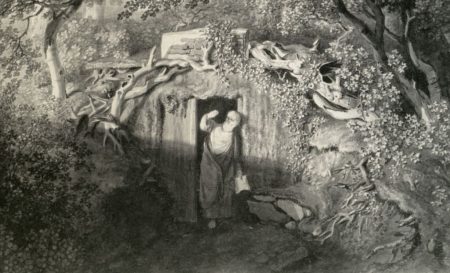
Do you have a garden, but it seems to miss a bit of pizzazz? Perhaps you should hire a hermit to live in it.
Garden hermits were all the rage among the wealthy European upper crust of the 18th century. Nobles and landowners would build artificial hermit’s caves or huts in their sprawling gardens.
They’d then pay some old bearded dude to live in it. In exchange for allowing garden party guests to gawk at him, the garden hermit would usually be provided with lodgings (that is, the cave), food, and maybe a little pocket money every now and then.
Know what? We bet there’d be plenty of takers if this job made a comeback.
Being a professional hermit isn’t the only strange gig at the time. Read more in our list of 8 of history’s weirdest jobs.
6. Segway
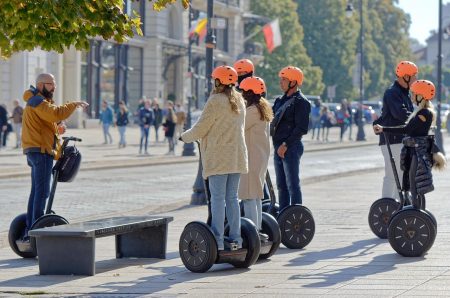
Oh man, remember the Segway? This bizarre two-wheeled contraption was supposed to revolutionize personal transportation.
It never did that. That might be because riding one looked really stupid.
Over its nearly 20-year lifespan, the Segway sold abysmally poorly. Since its introduction, only 140,000 units of all the Segway models were ever sold before their discontinuation in 2020.
And yes, the Segway was released 25 years ago, so it’s starting to count as a historical oddity. If that makes you feel old, you’re welcome.
7. Intentional Misspellings

Looking at the internet, you can’t help coming across smol hecking doggos and other purposeful misspellings. But the TikTok era did not create this trend.
If anything, it seems intentionally spelling things wrong for humor and sarcasm becomes popular on a pretty regular cycle. However, perhaps the most linguistically significant time it happened was in the 1830s.
For a while, people would use abbreviations of intentionally poorly spelled words as a fashion trend. Some of these included KG (“know go” for “no go”) and OW (“oll wright” for “all right”).
Most of these bizarre abbreviations are long forgotten, but one lives on. And that abbreviation is OK for “oll korrekt.”
Did you ever stop to wonder why you OK things when everything’s fine and dandy?