
- Bundle up and go explore the great outdoors when it’s super cold. You might be surprised.
It’s been a little bit chilly recently all over the Northern Hemisphere. And by little bit chilly, we mean people have gotten stranded at minus 40-degree temperatures.
That’s at the point where it doesn’t matter whether you’re counting in Fahrenheit or Celsius — it’s the same in both.
While extreme cold like that makes life difficult, it also results in many fascinating natural phenomena. Certain weird but cool (pun completely intended) things can only happen when the temperature plunges far, far below freezing.
Here are 7 odd things that you might see if you dare venture outdoors during extreme cold snaps. Spoiler alert: most require water.
1. Ice Flowers
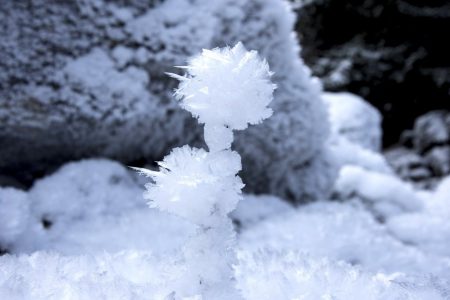
With “ice flowers,” you might think of the floral-like patterns ice forms on flat surfaces, such as windows. However, we’re talking about three-dimensional, flower- or fern-like ice structures growing out of rivers, walls, or even tree trunks.
These formations are a type of hoarfrost. They form when the air is so cold that evaporated droplets of moisture freeze almost instantly, gluing themselves to any nearby solid object.
So, if there happens to be a twig or even a hair sticking out, it may form the root of a fast-growing and beautiful, if otherworldly, ice flower.
2. Ice Eggs
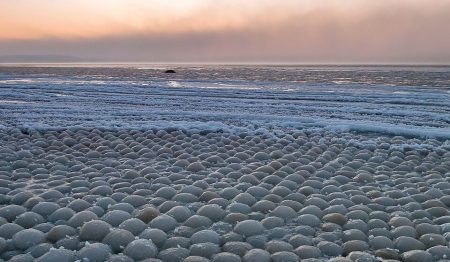
Ice eggs are bizarre bunches of spherical, smooth balls of ice that tend to collect on the shores of oceans, seas, and large lakes. These eggs, however, weren’t laid by some deep-sea ice creature.
Instead, they originate from small pieces of free-floating sea ice. As they bob in the open water in extreme cold, more ice gathers around the seed piece while the gently churning waves polish the piece into a smooth egg.
That said, if they stay afloat long enough, ice eggs can grow to be several feet wide. You’d need a big carton for a dozen of those bad boys.
3. Ice Pancakes
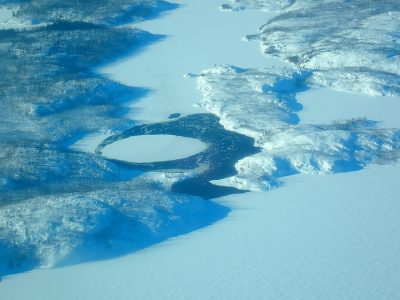
For a complete frosty breakfast, you can pair your ice eggs with ice pancakes. Also called ice discs or ice crêpes, these thin, circular ice formations are born from sheets of ice in slow-flowing streams when the temperature plummets.
As the ice sheet breaks free, the flowing water causes it to spin. As long as the stream doesn’t move too fast to shatter the sheet, it’ll eventually get ground into an almost perfectly circular pancake.
Much like ice eggs, if nothing disturbs it and the river’s wide enough, the pancakes can grow enormous. For example, an ice pancake nearly 300 feet in diameter was discovered in Maine in 2019.
4. Square Car Tires
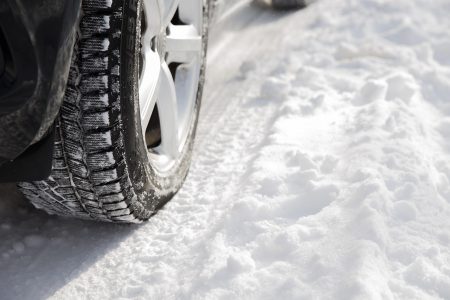
Everybody knows that your car’s engine will have trouble starting if it gets too cold. Another problem your car may face, though, is square tires.
Once the temperature drops below 30 degrees, the air inside the tire starts contracting significantly. Consequently, the tire loses pressure and begins to flatten.
In most cases, this results in a flatter section in the contact patch against the ground, but in certain cases, the tires can get significantly square-ish. This is why you should allow both your engine and tires to heat up before driving, or you’ll be in for a bumpy ride.
5. Sea Smoke
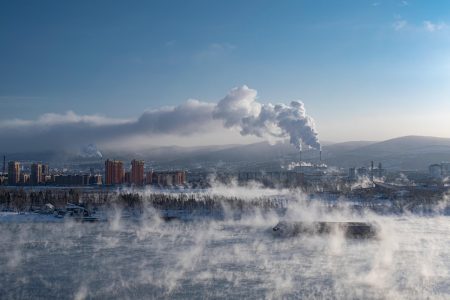
Walking by a large lake or sea in very cold weather, you might notice steam or smoke rising from the water. How can that be? Shouldn’t steam come from hot water instead of cold?
Well, the thing is that moisture will always evaporate from water — no matter how cold it is. However, when it’s really, really cold out, the water will be much warmer than the air above it.
So, as moisture evaporates, it begins condensing immediately in the freezing air. And so, you get steam rising out of water that’s barely above the freezing point.
That steam, then, can form ice flowers on floating ice patches, as we mentioned earlier. However, that steam could also result in…
6. Steam Devils
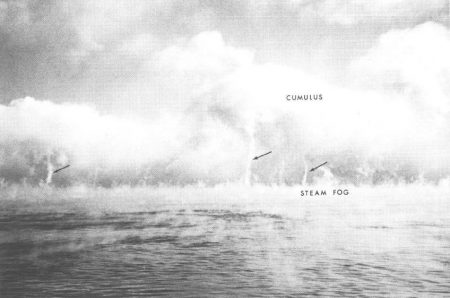
You probably know what dust devils are. Steam devils are pretty much the same thing, but instead of sand and dust, they’re formed out of sea smoke.
When a small whirlwind travels over water on a freezing day, it may capture some of the rising sea smoke. The twister then spins the steam into a visible vortex.
7. Frost Quakes
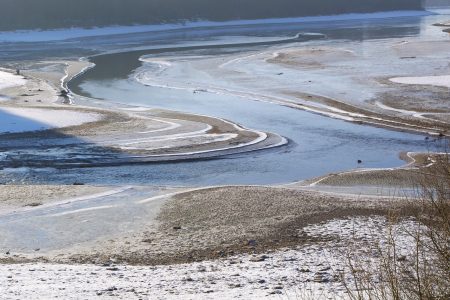
Cold areas of the planet that aren’t usually prone to seismic activity may experience small earthquakes in winter. Or, well, they’re not earthquakes, but frost quakes.
As you’re probably aware, water expands when it freezes. Extremely cold air may freeze groundwater at shockingly deep temperatures, causing it to start pushing soil apart.
When it’s that cold, it’s likely that the soil, too, is frozen and very brittle. In these conditions, the freezing water may build up enough pressure to explosively crack the soil, causing loud booms and small earth… Sorry, frost quakes.
8. Ghostly Noises
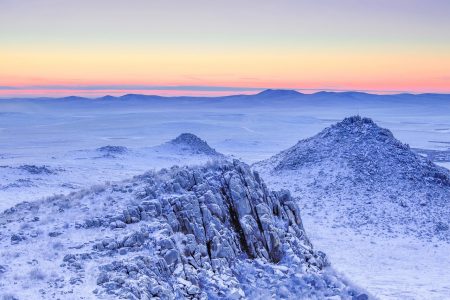
Everything seems to stand still when it gets really cold. Yet, many people are creeped out by eerie noises that they hear during freezing days.
That said, those noises may have a perfectly normal origin. However, due to changes in air density and pressure during super-cold periods, sound carries much, much farther than on warm days.
That ghastly roar you hear emanating from an indeterminable location may be just a truck driving down a highway. However, that truck could be miles and miles away — and over such distances, the sound will inevitably distort into something that will make you shiver.
That, or it’s just the cold air.