
- Have you ever seen a whale horse or pressed a white man for a straight answer?
The English language has a long and convoluted history. As such, it’s picked up plenty of words from very unlikely sources over the years.
We’ve covered 12 English words with unusual origin stories before, but there are many more to go. So, we figured we’d revisit this story to bring you more odd etymology.
Here are another 10 words in English with strange origins.
1. Lesbian
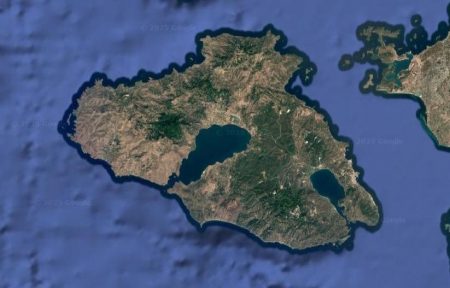
Original meaning: Greek island
You may have heard of this one. The word we use for ladies who like ladies originates from the Greek island of Lesbos.
The famous ancient Greek poet Sappho came from the island. Although most of her poetry has been lost, what remains has pretty strong implications that Sappho highly preferred the company of other women.
Thus, thanks to Sappho’s influence, “a person from Lesbos” eventually took on the meaning of a lady-loving lady.
2. Fiasco

Original meaning: Bottle
If something goes horrendously wrong, it’s a fiasco. Originally, however, this word meant (and still means) a bottle in Italian.
There are two theories of how bottles came to be associated with… Well, fiascos. The first theory deal with Venetian glass blowers. If something went wrong during the production of a fine vase, for instance, the blower would give up and shape the vase into a regular bottle to get at least some money out of it.
According to the second theory, the association with disasters comes from an Italian phrase meaning “to bet it on a bottle of wine.” Essentially, if you fail in a task, you’ll have to buy the drinks the next time you and your buddies hit the town — which can be a costly mistake indeed.
3. Cancer

Original meaning: Crab
Even wondered why the astrological sign of Cancer has the same name as a deadly disease? That’s because they share the same origin.
The word cancer stems from the ancient Greek word Karkinos, which simply means crab. To Greek physicians of the time, cancerous tumors — with swollen veins crawling out of them — looked like round crabs with many legs.
So, they started calling tumors “crabs” and the name stuck.
4. Walrus
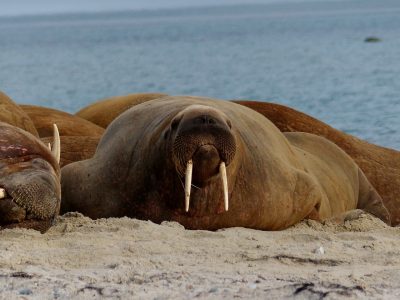
Original meaning: Horse whale
The exact origin of the giant toothy seal’s English name isn’t perfectly clear. However, the current prevailing theory comes from none other than J.R.R. Tolkien of The Lord of the Rings fame.
During his time working for the Oxford English Dictionary, Tolkien traced the origin of walrus to the Old Norse word hrossvalir. This word also referred to a walrus, but translates directly to “horse whale.”
We can see where the whale part comes from, but the Vikings must’ve had some pretty freaky horses.
5. Assassin
Original meaning: Faithful, disciplined
We know what you’re thinking: “But the famous origin of assassin is ‘hashishin,’ which means ‘hashish smoker!’” That’s indeed a common story, but it’s very unlikely it’s true.
Now, it’s true that the word stems an ancient Arabic order of professional murderers called Hashshashiyin. This name, though, is likely a mispronunciation or misspelling of Asasiyyun, which means “the principled ones,” “faithful ones,” “disciplined ones,” or something similar.
It’s most likely that the association with cannabis is the result of an intentional ancient smear campaign that aimed to discredit the murderers-for-hire. After all, you could basically translate Hashishin to “The Potheads” — not exactly an intimidating name for an assassin order.
6. Hazard

Original meaning: Poor dice luck
Here’s another word that stems from an Arabic phrase that went through a long game of Telephone. Originally, it’s currently believed that hazard comes from a 14th-century Arabic phrase yasara.
This phrase literally means “he played dice” or “he threw the dice.” However, it’s likely that its intended meaning was closer to “he took a gamble and lost.”
Yasara transferred into Spanish as azar, which means “random.” That word then went through France before landing in English, and by that time it had taken on the meaning of “dangerous risk.”
So, essentially a “gamble.”
7. Sandwich
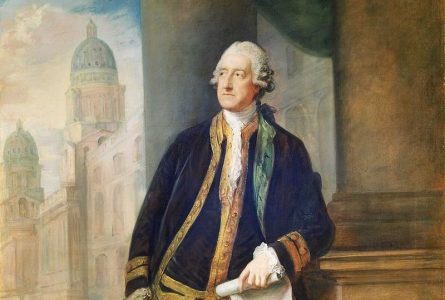
Original meaning: Earl of Sandwich
Like hazard, the word sandwich can perhaps trace its origins to gambling. This word stems from British noble John Montagu, the 4th Earl of Sandwich (that being a town in southeastern England).
The most popular story is that Montagu was such an avid card player that he didn’t want to stop playing to eat. So, he asked his servant to prepare him meat sandwiched between two slices of bread so that his fingers wouldn’t get messy.
Recent evidence, however, suggests Montagu asked for his innovative bread solution while working with important documents at his desk. That said, it works in both cases, so perhaps the good Earl ordered bread Sandwich-style on many different occasions.
8. Candidate
Original meaning: White man
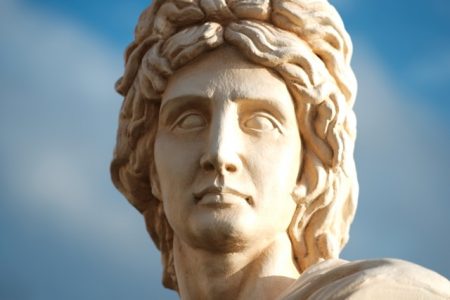
The word candidate basically means “white man,” but it’s not referring to anyone’s skin tone. Instead, the word comes from ancient Roman fashion.
At the time, politicians running for office would don a white toga. Pure white clothing was expensive at the time, so the aspiring officeholders were trying to communicate that they were rich, which obviously meant they were worthy of important jobs.
These men in their white togas were called candidati in Latin. Stemming from the word candidadus, or pure white, it then basically means “white men,” or perhaps “bleached men.”
9. Nimrod
Original meaning: Biblical king
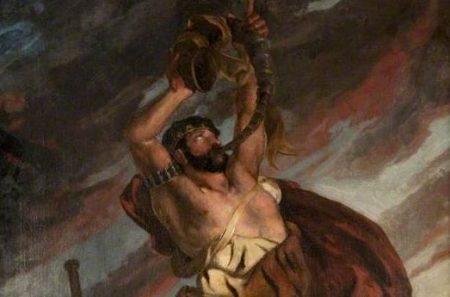
In the Bible, Nimrod is the great-grandson of Noah himself. He’s the king and ruler of Lower Mesoportamia who’s described as a mighty hunter.
How did this awe-inspiring figure’s name come to carry the same meaning as “dimwit?” Out of all things, it’s may be because of Bugs Bunny.
In early Loony Tunes cartoon, Bugs Bunny ridiculous Elmer Fudd for his lack of hunting skills by sarcastically calling him Nimrod. Kids watching the show didn’t know about the biblical connection, so they figured it simply meant “dummy.”
There’s no solid evidence that this is exactly where the change in meaning happened. However, nimrod didn’t take on the meaning of “idiot” until the 1980s, well after the Bugs Bunny skit had aired, so it’s perfectly possible.
10. Boycott
Original meaning: Charles Boycott
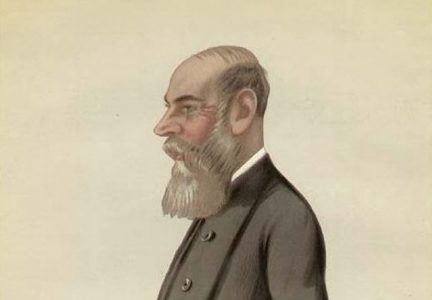
If you’ve ever boycotted anything, you’re paying homage to Charles Cunningham Boycott. He was a land agent who, in the mid-1800s, worked for English landlords in Ireland.
An Englishman himself, Boycott didn’t think much of the Irish — and it showed. He became infamous for being a cruel land agent who was arbitrary and openly discriminatory in his actions.
Instead of resorting to violence, the Irish farmers opposing Boycott instead decided to ignore he existed. They refused to harvest the fields he managed or buy anything from his stores. We can only assume that if Boycott tried talking to anyone, they went, “Did you hear that? Must’ve been the wind.”
Sadly, the protest didn’t end all that well for the farmers, as the English government cracked down with military force to enforce the harvest. However, the at-the-time innovative protest methods of the farmers still live on — as does Boycott’s name, but we bet this isn’t how he wanted to be remembered.