
- All bones tell a story, but some are a straight-up horror show.
We all become bones eventually. While unfortunate for us, our remains can tell a lot about our way of life to future archeologists.
That, or they could unearth our bones and utterly confused and creeped out by what they see.
Occasionally, some weird human remains pop out of the ground for one reason or another. They might be so strange, gross, or horrifying that they pose more questions that they answer.
Here are six examples of some of the oddest and creepiest human remains ever discovered. Halloween came early this year.
1. Elongated Skulls

All over the world, archeologists keep discovering ancient, bizarrely shaped skulls. These strangely elongated or bulbous old heads have given rise to a lot of theories about them being remains of alien visitors.
They’re not aliens, though. They are simply humans whose heads have been artificially deformed.
Cranial deformation has been practiced throughout human history all the way up to late 20th century. The process was usually begun as a child by wrapping increasingly tight strips of cloth around the still soft skull bones.
As to why this was done, there are different reasons. In some cases, it was a medical procedure. In others, it was done as the people believed it would make the person more intelligent, it had religious significance, or they just thought a strange oblong skull looked nicer.
2. Pickled Brain
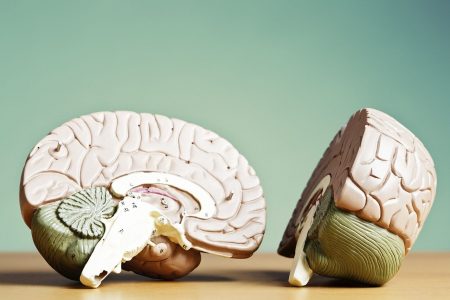
Unless you stumble upon a mummy, ancient human remains will most likely be bones. Soft tissues and organs usually decompose, but there are exceptions.
For instance, in 2011, they found a pickled brain in the U.K.
The thinking organ wasn’t floating in a jar, though. Instead, it was found inside a severed head recovered from a peat bog.
Although no other soft parts of the head had been preserved, the brain underwent through a natural pickling process inside the skull, thanks to the low-oxygen environment in the bog. So, some lucky scientist got to research the freshest 2,600-year-old brain they’ve ever seen.
If the researchers were able to see what the brain was thinking in life, though, they might see some criminal thoughts. The rest of the head suggested its owner was hanged and then decapitated, which suggests he did something very naughty in his life.
3. The Human Jigsaw of Grave 26

In the 1970s, archeologists found a bunch of Roman era graves in Belgium. Grave #26 was a bit weird, as its resident hadn’t been cremated as was the style at the time, but the researchers backed up the bones and took them to a storage facility.
When they finally got around to examining them decades later, things immediately got a lot stranger. For example, the person’s toes consisted of the bones of seven big toes.
That’s when it dawned that the bones hadn’t come from one person. The skeleton was a literal human jigsaw, assembled from the bones of at least seven different individuals.
Most bizarrely, all the bones were neolithic (that is, from the last Stone Age period) — except the skull. The skull belonged to Gallo-Roman woman who, according to DNA tests, had lived some 100 miles east.
Nobody has figured out who put the grim puzzle together, or why. However, the prevailing theory suggests that, while burying the woman’s bones, ancient Gallo-Romans accidentally unearthed a Stone Age grave.
Perhaps thinking they’d desecrated a wrathful ancestor’s remains, they hastily rebuilt the broken skeleton without paying too much attention on whether all the parts fit perfectly.
4. Knife-armed Man
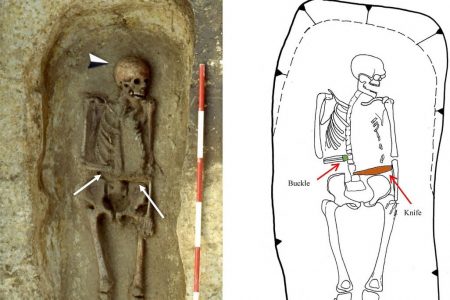
Meet T US 380. He was a 40-50-year-old Lombard man who lived in Italy in the early Middle Ages.
He’s also one of the most hardcore people to ever live.
To begin with, his remains (discovered in 1895) shower that his right arm had been amputated at the mid-forearm. Considering the time period he lived in, he likely went through the surgery without anesthesia, antibiotics, or any other hoity-toity treatments like that.
He didn’t let losing the limb stop him, though. In the same grave, archeologists discovered a prosthetic knife arm with its harness that the man had strapped to his stump.
Evidence from the skeleton suggests that the man lived with his stabby appendage (stabbendage?) for a long time. His teeth were worn in a way that suggests he repeatedly tightened his prosthetic arm’s leather straps with them, and his arm bones had also worn down to match the knife’s connection point.
What he did with his knife arm is a matter of debate. The Lombards were warriors through and through, though, so he may have taken to the battlefield with his arm replacement.
As we said, hardcore.
5. Cannibals of Cowboy Wash

In many places around the world, archeologists have found ancient bones that bear telltale marks of butchery, comparable to those of animal bones. Still, these injuries still don’t definitively show that people in the area practiced cannibalism.
It’s a different story with Cowboy Wash, an archeological site in southwestern Colorado.
Here, archeologists found 12 roughly 1,000-year-old human skeletons. Five had been buried in the usual manner of the area, but seven were heaped in a pile like animal bones.
These skeletons clearly showed that someone had stripped them of their flesh. The bones had cut marks where muscle tissue once connected to them and skulls had been cracked to scoop out the brain matter. Additionally, the bones (and several dishes found at the site) showed obvious signs of cooking.
Yet, the most damning evidence came from a human coprolite — a fossilized piece of poop. An examination revealed the presence of human myoglobin, a protein found in muscle tissue.
There’s only one way the myoglobin could’ve possibly gotten into the feces.
6. The Unrelated People
As you’re no doubt aware, you need people to make more people. As such, even thousands of years old bones often bear DNA markers that can be connected to people living today.
That’s not the case with the remains found in Colombia’s Bogota Altiplano.
This bunch of bones belonged to hunter-gatherers who lived in the area some 5,000 years ago. Mysteriously, their DNA doesn’t directly match with any known human population that came before or after them.
Of course, these people couldn’t have just popped out of the ground. Their remains carry some connections to groups living on the Isthmus of Panama and farther south in South America — but none of the connections are strong to imply any kind of direct lineage.
Whoever the Bogota Altiplano people were, they are strange isolated group in the middle of unrelated people. No one is sure how this happened, but it’s possible that there were once many more groups in the area that have been utterly lost to history.