
- If you thought human sex life was complicated, you’ve seen nothing yet.
To keep your species alive, you need to have babies. For the most part, procreation follows the classic, tried-and-true method.
If you don’t know what we’re talking about, go ask your parents about the birds and bees.
Nature isn’t big on standardization, though, and some animals carry on their legacy in unusual ways. Some of them are absolutely horrific, while others are just… Bizarre.
As the famous quote goes, life finds a way. Here are eight ways that will leave you puzzled.
1. Virgin Birth
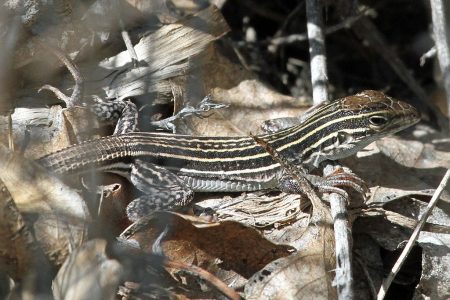
With humans, virgin birth is such a big deal that it results in a religion. In nature, however, it’s shockingly commonplace.
Some female insects, sharks, and reptiles are capable of having babies without ever seeing a male of their species in a process called parthenogenesis. Then there’s the New Mexico whiptail, a small lizard that takes this to the extreme — this species consists entirely of females.
In each case, the female’s unfertilized reproductive cells begin to divide on their own until they result in a bouncing baby. However, the offspring produced through parthenogenesis is always a genetic clone of its mother, so it’s generally a last-ditch effort.
Unless you’re one of the lesbian lizards.
2. Genetic Theft
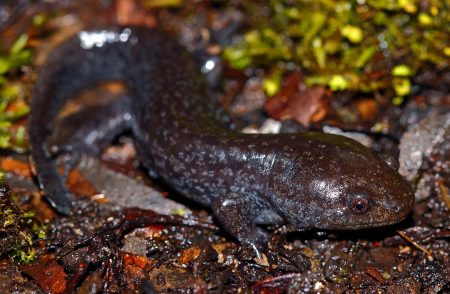
Speaking of all-female species, let us introduce you to the unisexual mole salamander. These amphibians are all girls, yet they still need sperm to kickstart their baby-making process.
So, what’s a lonely gal to do? Well, she will go and mate with males of other salamander species.
However, even after getting down and dirty, unisexual mole salamanders still typically produce clone offspring, just like with parthenogenesis. Except sometimes they don’t.
Through a process called kleptogenesis, which even the most dedicated researchers don’t understand, the mole salamander can store sperm from up to five males of other species. She then somehow picks and chooses which genes (if any) she wants to incorporate into her babies.
Mole salamander girls might seem easy, but they’re actually the pickiest of all — they can reject your genes even after banging you.
3. Clutch Piracy

You probably learned how frog sex works in biology class. The female lays a bunch of eggs in water and then the male splooges on them to fertilize them.
This process, however, generally leaves most of the eggs unfertilized. And that’s what the males of one frog population in the Pyrenees mountains count on.
This mountain-bound frog population has way fewer females than males. This means most of the guy frogs miss out on sex.
In an attempt to continue their legacy, they will seek out egg clutches luckier couples have laid. In an act known as “clutch piracy,” they will then spray their love all over the other frogs’ eggs, hoping they’ll fertilize a few of them.
4. Back-and-Forth Sex Change
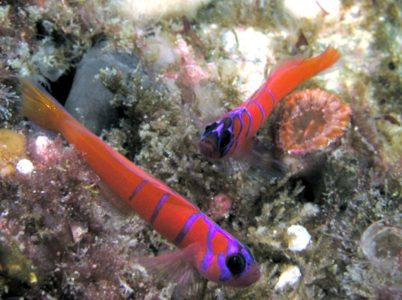
Blue-banded gobies are tiny tropical fish, living in close-knit groups of around 100 fish around warm coral reefs. In these groups, there’s one dominant male, while the rest of the fish are female.
Once the king dies, however, the largest female will take his place. The fish won’t stay female long, though — she quickly undergoes a sex change and becomes the new dominant male.
That’s impressive enough on its own, but the gobies can swing the other way around, too. If you have an all-male group, the smallest of them will abandon its testes and grow ovaries in their place.
That sure is one way to ensure that as long as there are two blue-banded gobies left, they can get busy.
5. Detachable Penis
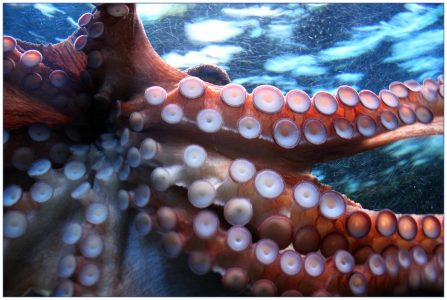
For most guys, losing your penis would be a nightmare. For the male argonaut octopus, however, that’s how you do the deed.
These small octopuses sport one modified arm with sperm-producing sacs — essentially, it’s a prehensile penis. When a male argonaut octopus spots a mating-capable female, he’ll swim over to her and slip his penis-arm in.
He’ll then detach it and swim off to die. Job’s done; goodbye, cruel world.
The male doesn’t necessarily even need to get it in, as the detached penis can wriggle and swim to a female on its own. The octopuses have even been observed ripping their own d***s off and presenting them as gifts to the female.
What an awkward Valentine’s Day present.
6. Brain Penetration
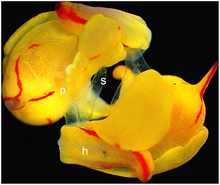
Depending on how kinky you are, there are a few places in which you can stick it. The brain, however, isn’t usually one of them — unless you’re a Siphoteron sea slug.
Now, these slugs are hermaphrodites, so sex is already a bit weird for them. They essentially have a fencing match with their penises, trying to penetrate their opponent before they do the same to them.
However, the Siphoteron slugs also have a small barb they’re trying to jam into the other one’s central nervous system. Should they succeed, the winner pumps hormones directly into the loser’s brain to force it to produce more eggs.
7. Possessed Zombies
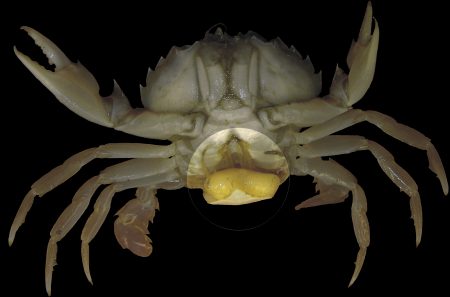
Meet the rhizocephala. These barnacles are known as “parasitic castrators,” which already tells you that they don’t approach sex like most animals.
As larvae, they will attempt to find a crab they can latch on to. Should they find one, the barnacle larva crawls into the crab’s sinus and grows a root network to take over the crab’s system.
It then peeks out of the female crab’s egg-laying orifice and deposits its own eggs there. Then, it pilots the zombie crab into a deeper ocean where the barnacle can finish its breeding cycle.
Oh, and if the barnacle takes over a male crab? No problem — it simply forces the crab to undergo physical changes until it essentially turns into a female.
8. Sex-Controlling Grandmothers

It’s nothing new for parents to try and control horny teenagers. As annoying as that can be, just be glad you weren’t a Japanese climbing fern as a kid.
These ferns can be male, female, or hermaphrodite (as much as those terms apply to ferns). However, the ferns know self-fertilization leads to an inch-deep gene pool.
So, once older female ferns sense new, young ferns are growing around them, they spray a chemical called gibberellin. The chemical lands on the growing ferns, overriding their genetic information and ensuring that they grow into males.
This way, they control and maintain the male/female balance in their immediate surroundings. It’s basically the equivalent of your grandma deciding which gender you’ll end up being as you’re growing up.