
- When your prey is cunning, you have to be doubly so.
Unless you’re willing to eat carcasses exclusively, consuming meat requires hunting. The prey, however, typically doesn’t want to be eaten, so catching them can be a real challenge.
We humans have arguably perfected hunting. We have the baits, tools, and guns to take out pretty much any other living thing on the planet.
For carnivorous animals, the task is not so simple. Yet, they won’t be daunted and many beasts have developed ingenious (if a bit strange) hunting methods that may surpass what humans can do.
Here are eight animals whose hunting tactics are odd and creative in equal measure. You can’t help but wonder how some of these critters figured this stuff out.
1. Bubble Nets
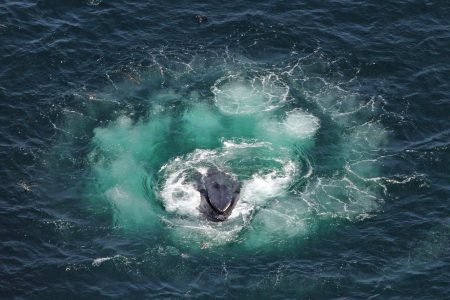
When you want to catch a lot of fish, you cast a net. A humpback whale’s appetite could certainly be well served by a net, but using one is kind of difficult without hands.
Good thing for the whale, then, that they’ve figured out how to make fishing nets out of air bubbles. When a humpback whale detects a suitable school of fish, it begins swimming in a circle underneath them and blowing air out of its blowhole.
The circle of air bubbles rises to the surface and confuses the small fish, corralling them into a tight ball. Then, the whale quickly swims up, opens its mouth, and swallows the whole school in one gulp.
2. Living Minefields
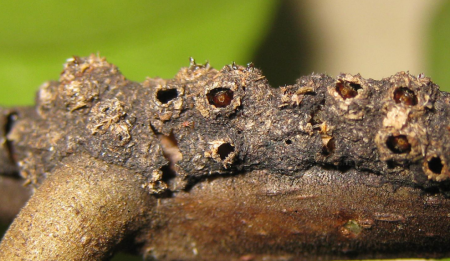
Azteca brevis is a species of small ant living in the rainforests of Central America. They like to eat other insects, but to need an entire nest, they need to catch a lot of bugs.
So, they build minefields — where each mine is a living ant.
The A. brevis workers will burrow holes in the outer surfaces of their nests. They then back themselves into the hole, with their prepared jaws hidden just out of sight.
When a hapless insect steps on the mine (that is, the hole), the ant pounces. It grabs the victim in its mandible, pulls it into the hole, and holds it in place while other ants rip it apart.
Brutal, but effective.
3. Lassoes
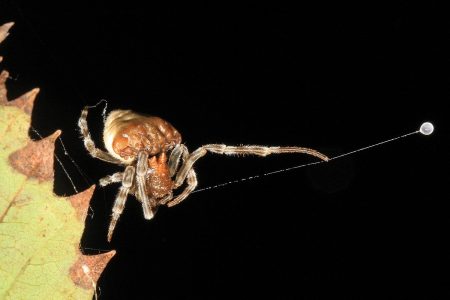
Rootin’ tootin’ cowboys aren’t the only ones who sling lassoes to catch cows or bad guys. The female bolas spider does it as well.
The spider produces a long length of silk, tipped with a large, extremely sticky silk blob. It then begins emitting pheromones similar to those of certain female moths.
As a horny mole moth flaps to the scene, the spider swirls the lasso around and throws it at the moth, snaring it mid-air. Then, it’s just a matter of dragging the caught victim to her venom-dripping fangs.
Curiously enough, male bolas spiders don’t make lassoes. A 0.06 inches long, they’re so much smaller than the roughly inch-long female that they have no need for such elaborate tricks.
4. Firefly Flashlights
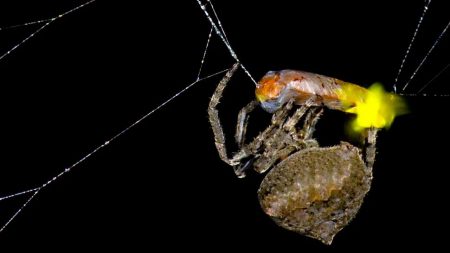
Araneus ventricosus is a Chinese orb-weaver spider. It can’t make a lasso like the bolas spider, but it still has an equally inventive — and infinitely crueler — hunting method.
A. ventricosus likes to feed on fireflies, but it doesn’t immediately chow down when it catches one. Instead, it injects its specialized venom into the firefly, highjacking its nervous system.
The venom forces the firefly’s glowing butt parts to flash in the same pattern as those of a female looking for a mate. Male fireflies see the light and assume they’re about to get some, so they fly on over.
However, the only thing awaiting them is a quick death. This is like putting a “GIRLS GIRLS GIRLS” sign on a slide leading into a meat grinder.
5. Spider-Shaped Tails
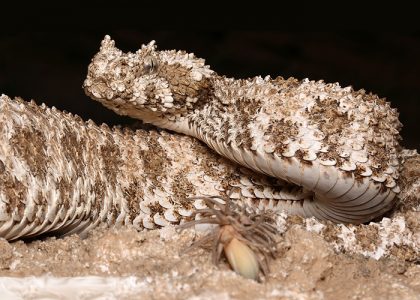
Despite their inventive hunting tactics, spiders fall prey to other animals as well. The spider-tailed horned viper knows this and uses certain animals’ hunger for spiders to its advantage.
The tips of these snakes’ tails have a unique growth that kind of looks like a spider — if you have a very vague concept of what a spider is. That’s fine for the viper, though, since the tail is spider-like enough to fool lizards, rodents, and birds.
The viper camouflages itself in sand, leaving its tail tip in plain sight, and… Well, the predator becomes prey in one quick snakebite once an unwitting spider-eater gets too close.
6. Crying Like a Baby
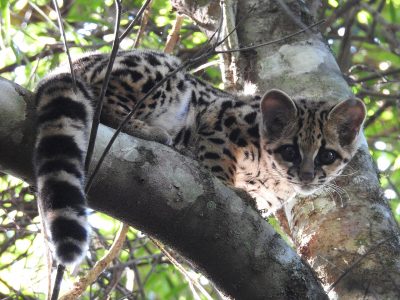
Hearing your baby scream in panic is one of the worst sounds a parent can hear. That goes doubly for the pied tamarin monkeys of Brazil, because they can never know whether the thing crying is an actual infant monkey or a bloodthirsty predator.
Meet the margay, a small wild cat living throughout Latin America. The margay population in Brazil has learned to mimic the cries of distressed pied tamarin infants with incredible accuracy.
So, the cat simply hides among the branches of a tree and starts yelling. Of course, a concerned pied tamarin parent soon comes to check up on the noise — and then the margay pounces.
For how cute they are, margays sure are sadistic.
7. Gooey, Glowing Fishing Lines
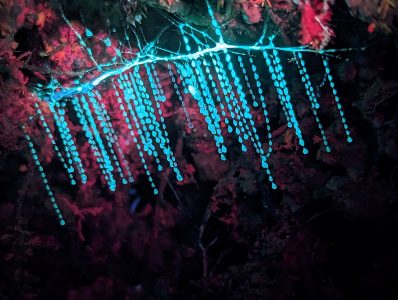
Once they reach adulthood, the Arachnocampa luminosa fungus gnats never eat. As larvae, however, they’re ravenous carnivores better known as glowworms.
The larvae attach themselves to the ceilings of caves or branches of large trees in huge colonies. They will then let a sticky line of drool up to 20 inches long drip out from their mouths.
As the larvae dangle the gooey fishing lines, they begin to glow like fireflies. The light attracts small flying insects that get tangled in the fishing line.
Once caught, they can only struggle hopelessly as the larva reels its line back into its mouth.
8. Actual Fishing
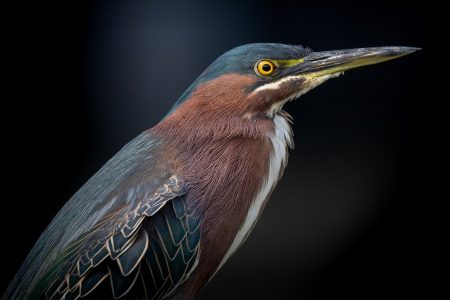
Alright, so the glowworms use fishing lines. But they’ve got nothing on the green heron, which actually fishes.
Naturally, it can’t use a fishing rod, what with the lack of hands and stuff. Yet, what it does undoubtedly counts as fishing.
The heron will look for something that fish find yummy, such as insects or pieces of bread. If it can’t find an actual edible bait, it might pluck a feather that could attract a curious fish.
The heron then flies to a body of water and drops the bait in. It waits patiently until fish arrive to check out the disturbance before catching them in its long, sharp beak.