
- You certainly wouldn’t fall for silly pranks like this… Right?
Everybody loves a good prank — as long as they’re the prankster and not the pranked. That said, we can all find the humor in a good-natured prank between buddies.
However, die-hard pranksters sometimes decide it’s not enough to prank friends and family. No, they’re determined to turn the entire public into the butt of a joke.
Often, they succeed.
Here are eight times from both recent and ancient history when jokesters played a joke on everybody around them.
1. The Caltech Football Prank

No, the California Institute of Technology (Caltech for short) has a bit of a reputation for playing jokes on other colleges. But perhaps its students’ most famous and/or notorious prank took place in 1961 during a Rose Bowl football game.
Before the game, 14 Caltech students had found out that the cheerleaders for the University of Washington Huskies were planning to hand out colored cards to the team’s supporters in the audience. On call, the audience would lift the cards to spell out the word “HUSKIES.”
However, the pranksters swapped the cards and instructions. When the call came, the audience proudly displayed the word “CALTECH” instead.
That was particularly weird since Caltech wasn’t playing — the game was between the Huskies and the University of Minnesota Golden Gophers.
2. Rome’s Prankster Emperor
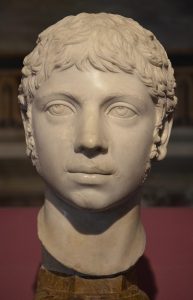
Elagabalus was a teenage Roman Emperor between 218 and 222. His reign was cut short by assassination, and it’s not too surprising because Elagabalus was a notorious prankster.
His pranks, however, typically veered toward sheer sadism. One of his most famous “jokes” included releasing hundreds of snakes into a crowd gathered for public games.
Several people died or got injured both due to snake bites and the resulting stampede as people tried to escape.
With that said, Elagabalus was incredibly generous and would shower his dinner guests with lavish gifts on a whim. Unless they drank too much and passed out, in which case he would lock them in a cage with a (tame) bear.
It’s just a prank, bro.
3. The Washing of the Lions
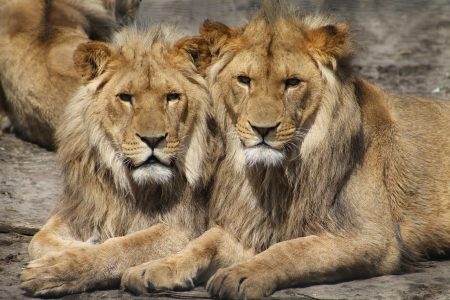
The Washing of the Lions is the oldest recorded April Fools’ joke from 1698. On April 1 of that year, an unknown jokester invited several people to come watch the public washing of the Tower of London’s lions.
That’s not as weird as it sounds, as the British royals used to keep a zoo of exotic animals at the Tower. Most people at the time would’ve never seen a lion, so they flocked to see them get washed.
Of course, there was no public lion washing, and people went home disappointed. However, it seems Londoners never learn, since several other pranksters have repeated the joke several times over the centuries.
4. The Elected Rhino
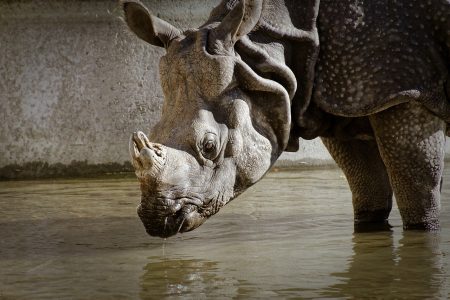
In 1959, the city of Sao Paulo was preparing for city council elections. However, due to ongoing issues with sanitation and sky-high cost of living at the time, many people didn’t put much stock in anything changing.
So, Sao Paulo students launched a campaign to get a rhino from the local zoo elected to the city council. Might as well since he’ll govern as effectively as the human candidates, right?
Well, the rhino won — by a landslide. It received more than 100,000 votes, whereas the candidate in the second place got only 10,000.
The Sao Paulo election board didn’t certify the rhino’s victory, but it did send a message.
5. The BBC Spaghetti Harvest
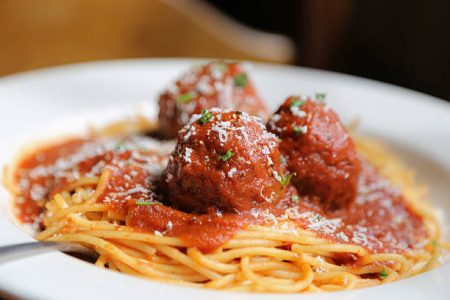
On April 1, 1957, the BBC broke strange news during an otherwise normal TV news broadcast. According to the newsreader, the Ticino region of Switzerland, near the Italian border, was enjoying a record spaghetti harvest.
The video footage then cut to show happy farmers picking spaghetti off spaghetti trees.
Now, back in 1957, spaghetti wasn’t yet a regular part of the British diet. So, many enthusiastic would-be spaghetti farmers ended up contacting the BBC and asking how they could start growing spaghetti at home.
Others weren’t so understanding and sent angry messages berating the BBC for putting jokes into a serious newsreel.
6. The (Taco) Liberty Bell
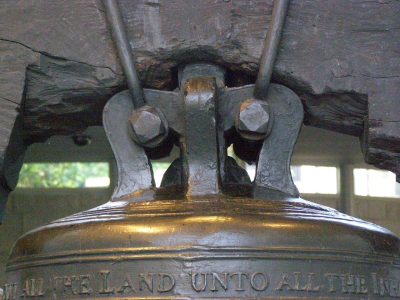
Speaking of jokes that sparked public outrage, though, it’s hard to beat Taco Bell’s 1996 prank and advertisement campaign. The company placed advertisements in major newspapers, such as The New York Times and The Washington Post, announcing that it had purchased the Liberty Bell.
Reportedly, Taco Bell intended to rename the relic the “Taco Liberty Bell” and place it at its headquarters in California. Needless to say, the American public wasn’t happy with the idea.
After multiple angry calls from citizens and U.S. senators alike, Taco Bell clarified that the whole thing had been a combination of an April Fools’ joke and an advertising stunt.
You might think the campaign backfired, but you’d be wrong. According to Taco Bell, the company racked up $1 million in increased sales within 24 hours of running the ad.
7. The Dreadnought Hoax
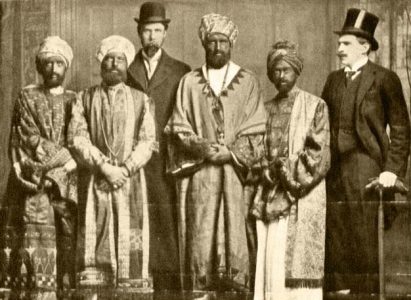
Horace de Vere Cole was an Irish soldier and eccentric who loved causing public mayhem. For instance, he would walk around London with a cow’s teat sticking out of the fly of his pants.
But his most famous prank is what’s today known as the Dreadnought Hoax. In 1910, Cole and three of his friends (including the writer Virginia Woolf) donned “oriental” outfits, applied blackface on themselves, and sent a message to the commander of the battleship HMS Dreadnought that “Prince Makalen of Abyssinia” wanted to tour the ship.
And it worked. The “prince” and his entourage got a full royal tour of HMS Dreadnought, during which they communicated in gibberish to fool the Royal Navy officers.
As the prank was later discovered, the Navy wanted to sue Cole for humiliating them, but he hadn’t actually broken any law. Racist as his joke was by today’s standards, he sure did expose a gaping hole in the Royal Navy’s security.
8. The Great Moon Hoax
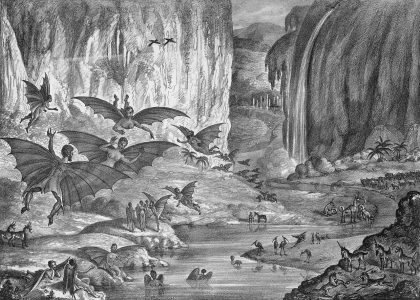
On August 21, 1835, a New York newspaper called The Sun announced great news. It would print a six-part series of articles by astronomer Sir John Herschel detailing his incredible discoveries of life on the moon.
And what life it was. The articles claimed the moon was populated by winged bat-people who built great temples in its lush forests.
Of course, none of the story was true. It was all fictional, sensationalist nonsense meant to drive up sales of The Sun — which it did.
But the kicker here is that Sir John Herschel was a real astronomer who had nothing to do with the articles. He initially welcomed the newfound interest in his research, but soon grew tired of people asking him endless questions about the bat-men of the moon.