
- Sometimes, ignorance really is bliss.
They say that you are what you eat. If that’s true, then most of us are…
Well, we’re a lot of things you would not expect.
If you’ve ever looked at the ingredient lists of some very common things we eat, slather on our faces, or otherwise use, you’ve seen many strange words. Typically, we don’t pay them much mind, since we simply don’t know what the substances are.
But when you put them into more plain terms, they might pique your curiosity — or engage your gag reflex. Here are just a few weird and sometimes gross ingredients found in common foods and other products.
1. Lanolin

Lanolin is a lubricating wax material that has found its way into a whole slew of products. It’s used, among other things, in lip balms, lubricants for loading firearms ammunition, leather conditioners, and creams for breastfeeding mothers’ sore nipples.
But what is this substance?
It’s sheep sebum. It’s the oils sheep’s skin glands secrete to keep their wool warm and waterproof.
You know how your hair gets all waxy and oily if you don’t wash it for a few days? Yeah, it’s that stuff — just from sheep.
2. Apitoxin
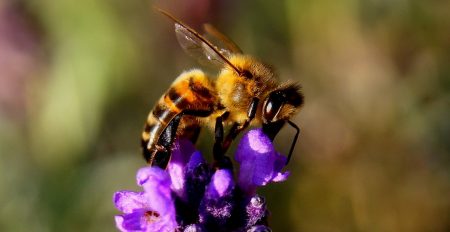
That “toxin” part of apitoxin’s name must be misleading, right? No way it’s an actual toxin, right?
Oh, but it is. Apitoxin is simply bee venom.
Venom is harvested from bees mostly for skincare products. Although it’s an irritant in large doses, small amounts of bee venom are supposed to help heal and regenerate skin to remove age lines, for instance.
There’s no scientific proof that the stuff actually does anything for your skin. But that doesn’t stop companies from mixing it into skin creams.
3. Carrageenan
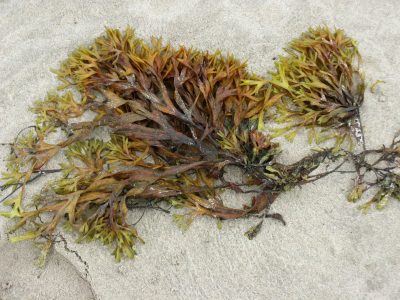
If you think about eating seaweed, your thoughts probably jump to Asian cuisine and dishes like sushi. But you don’t have to go to a Japanese restaurant to eat some seaweed.
Just pick any dessert containing carrageenan — which is a lot of them.
Carrageenan is a goo extracted from red edible seaweeds. It’s a powerful thickener that’s particularly used in desserts, from pudding to chocolate.
That said, it’s also an ingredient in some beers, shampoos, sauces, shoe polish, and fire-extinguishing foams. What a versatile goop seaweed makes.
4. Carmine
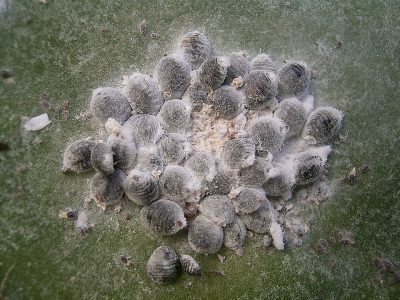
Carmine is a deep red color that — in food and cosmetics applications — is produced with a dye also called carmine. And that latter carmine comes from ground-up bugs.
Specifically, the dye is produced by female cochineals that feed on several American cactus species. As such, Native American civilizations, such as the Aztecs, have been producing it from the bugs for nearly 2,000 years.
It was originally used to dye textiles, but people eventually realized it was safe to eat. So, today, you can find the red bug powder in everything from yogurt to nail polish.
5. Snail Mucin

Did you think ingredients couldn’t get grosser than ground-up bugs? Well, let us crush that illusion and tell you about snail mucin.
This ingredient is widely used in skincare. It’s very effective at hydrating skin without turning it oily, it can supposedly help with acne and mild burns, and it can smoothen the skin’s texture.
It’s so effective that some skincare products consist of more than 90% snail mucin. So, what is this snail stuff, in the end?
Snail mucin is the mucus snails leave behind as they crawl along — essentially, it’s what forms the snail trail. Aren’t you happy knowing that?
6. Castoreum

Ah, castoreum. This wonderful substance has historically been used to imitate vanilla flavors, although it’s largely been replaced in that application by vanillin.
Yet, castoreum is still popular in perfumes. It adds rich leather notes to scents from such large brands as Chanel, Lancome, Givenchy, and others.
In a weird way, it makes sense you’d use castoreum in perfumes. This beaver anal secretion does stink to high heaven, after all.
There’s a silver lining, though — castoreum doesn’t come from a beaver’s butthole. Beavers have special castor sacs on their butt-ends that they use to scent mark their territory borders.
7. Shellac
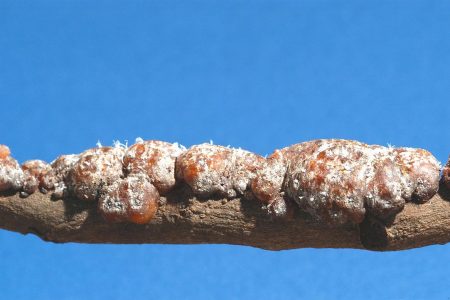
You know, we still haven’t covered a single poop product on this list. Let’s change that.
Ladies and gentlemen, here’s shellac. This resin is secreted from the butts of female lac bugs as they slurp up sap from various trees on the Indian subcontinent.
Shellac, consisting of waxy and acidic substances, produces a bright, glossy surface when mixed into alcohol and allowed to dry. As such, its most common application is in wood finishing.
But that’s not its only use. Have you ever wondered how they make jelly beans so shiny?
Yup. Shellac.