
- There are so many fun facts to learn about teeny tiny hummingbirds!
Did you know the teeny tiny hummingbird has 100 different species and that they don’t eat with their long beak but rather lap up sweet liquids like a cat and milk? Here are more teeny tiny hummingbirds.
There is a lot of variability with the color and look of the iridescent parts of hummingbirds. The male Allen’s and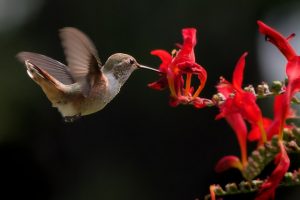 rufous hammers have blazing orange-red throats while the male Anna’s hummer has a bright magenta throat, face and crown. The Costa’s hummingbird has neck feathers that taper to each side of its mustache-like points on the sides of its head, all the color of royal purple.
Hummingbird eggs look like mini white jelly beans and are the size of navy beans.
There are hundreds of hummingbird species and about 340 of the living species are entirely and uniquely North or South American. These hummingbirds can be found all the way from Alaska to the southern most tip of South America. There are only 15 types of hummingbirds that are often spotted in the United States.
Hummingbirds eat nectar and sugar-water feeders, along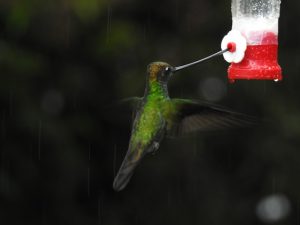 with sap and small insects as their diet. It takes them a lot of time to hunt and eat small insects and spiders. Did you know this about teeny tiny hummingbirds?
Hummingbirds are known to come back to feeders and flowers year after year. They have been seen, through banded research, to return to the areas where they were hatched!
Hummingbirds eat like cats in that they lap up nectar and sugar-water instead of using their beaks. Hummingbirds have a thin tongue with a fork-like tip and they repeat their eating process and tongue movements 15-20 times per second.
Hummingbirds look cute and movies like Pocahontas make us think they are just cute little flitty birds but they are actually pretty aggressive. Because they are so little they can be very territorial and spend time chasing other birds away from their feeders or flowers. “Birds that drink nectar tend to be aggressive,” Chris says. Researchers’ best hypothesis is this: Most birds need to find their food—hidden seeds or grubs—but hummingbirds feed on flowers that are showy by nature. That means they can see all their food sources, but so does the competition. “They evolved to be really aggressive defending that food from other animals that might also eat it,” Chris says. Did you know this about teeny tiny hummingbirds?
It takes a hummingbird about five to seven days to build its nest. Females are the ones to build the nests and they make them of lichen, moss, and spiderwebs.
Teeny tiny hummingbirds have teeny tiny nests. A typical nest is about the size of a half-dollar coin.
The patch of colorful feathers that covers a hummingbirds throats is called the forget and the colors come from their feather structure and not the pigmentation. These structures reflect light and according to a scientific advisor for BirdNote named Bob Sundstrom says it “creatures color in the manner of sun glinting off an oily film on water.”
Hummingbirds migrate alone and the wintering grounds may vary by species. Ruby-throats spend their time in southern Mexico and northern Panama. (This is an important reason to remember to keep your feeder up for late-r migrating baskets.) Did you know to do this for teeny tiny hummingbirds?
Although hummingbirds are known to return to the place they were hatched,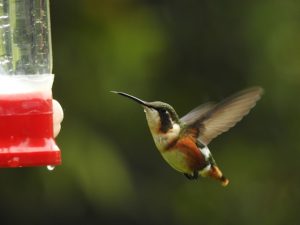 the Rufous hummingbirds migrate farther than all other North American species. They go all the way from Mexico to Alaska every spring, traveling 4,000 miles each time.
What’s your favorite fun fact about teeny tiny hummingbirds? Let me know in the comments!