
- From flying sheep to the oldest housecat, some animals will likely never be forgotten.
Human history is filled with legendary animals. And by that, we don’t mean mythical creatures like dragons or unicorns.
Some very real animals attain legendary status throughout their lives. It may be because they did something heroic, belonged to a famous person, or were simply in the worst possible at the wrong time.
Here are seven famous creatures from history that are legendary for their deeds — or at least the stories about them.
7) Bucephalus
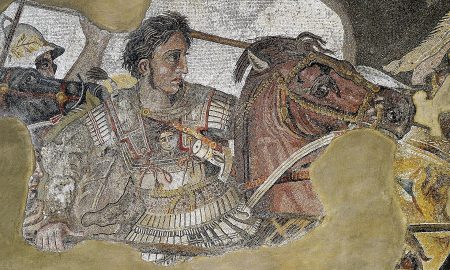
Let’s start with an animal you may have heard of. Bucephalus was the horse of none other than Alexander the Great.
Bucephalus is said to have been a giant of a horse that was so foul-tempered that no one could break him in. However, clever Alexander realized the horse misbehaved because it was terrified of its own shadow.
So, Alexander made Bucephalus face the sun and hopped onto his back. With the sun in his eyes, Bucephalus couldn’t see his shadow and Alexander successfully tamed him.
The horse then carried the ancient king as he conquered most of the world known to Europeans at the time. Bucephalus reportedly died at the Battle of Hydaspes in 326 BCE and Alexander raised the city of Bucephala around his tomb.
6) Montauciel
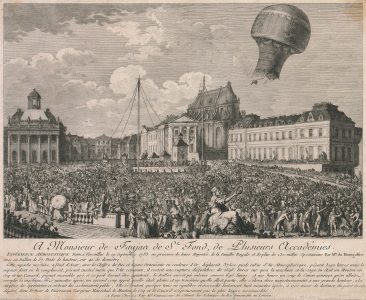
Montauciel was a regular sheep in France at the end of the 18th century. However, in 1783, he became the first mammal (discounting bats) to soar in the sky.
To demonstrate their newfangled hot air balloon to King Louis XVI, the Montgolfier brothers loaded three animals into its basket — a duck, a rooster, and Montauciel. They then sent the trio on its way and the animals flew a couple of miles, reaching 1,640 feet in altitude, before crashing into a forest.
Ironically, the impact knocked out the duck and rooster. Montauciel, however, was discovered grazing peacefully near the crash site.
After the flight, Queen Marie Antoinette supposedly adopted Montauciel. Not a bad deal — fly a couple of miles and you get to live the rest of your life in luxury.
5) Porphyrios
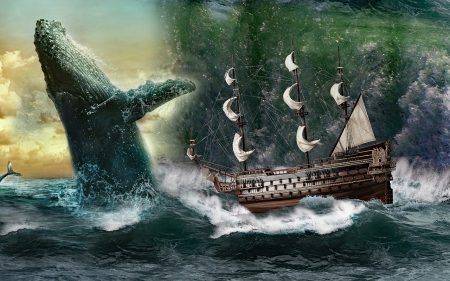
Before Moby Dick achieved fame, the most famous monstrous whale was Porphyrios. This enormous whale terrorized the sailors of the Byzantine Empire for nearly 50 years in the sixth century.
It’s unknown what kind of whale Porphyrios was — he may have been either a huge orca or a sperm whale. Nonetheless, it attacked and sunk Byzantine ships in the Mediterranean and the Black Sea for half a century.
Emperor Justinian is said to have devised many plots to kill the rampaging whale, but none succeeded. In the end, Porphyrios was killed by its own carelessness.
The story says Porphyrios accidentally beached itself while hunting dolphins. Discovering their hated nemesis on dry land, Byzantine locals descended on the huge whale, hacked it to pieces, and ate it.
4) Cher Ami
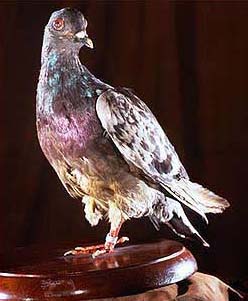
Not all war heroes are soldiers. Cher Ami was an American messenger pigeon who went to the frontlines of WWI in 1918.
In October of that year, Cher Ami was part of Major Charles Whittlesey’s forces when they got trapped behind enemy lines. Being shelled by their own American artillery, Whittlesey sent Cher Ami to tell the batteries to stop shooting.
The opposing Germans weren’t about to let the messenger pigeon pass unharmed, though. On its way, Cher Ami took a bullet to the breast, lost an eye, and had her right leg blown off.
Yet, the brave bird successfully delivered the message, allowing what was left of Whittlesey’s troops to be rescued. For her bravery, Cher Ami received the French Croix de Guerre.
3) Yafur
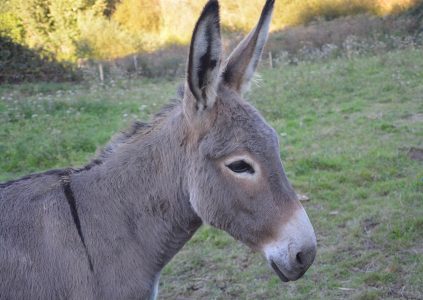
In Islamic tradition, Yafur was a donkey that once belonged to Prophet Muhammad. In the most widely accepted account, he was simply an animal that Muhammad received as a gift from the governor of Byzantine Egypt.
Some more debated sources, however, build Yafur into a much more significant character. To begin with, he could talk.
In this telling, Yafur stated he was part of a lineage that had served as mounts for all the past prophets. For instance, it was Yafur’s ancestor who carried Jesus when he entered Jerusalem before his crucifixion.
The donkey is said to have served Muhammad faithfully, delivering messages even without the Prophet on his back. Once Muhammad died, Yafur was overwhelmed with grief and drowned himself in a well.
2) Saint Guinefort
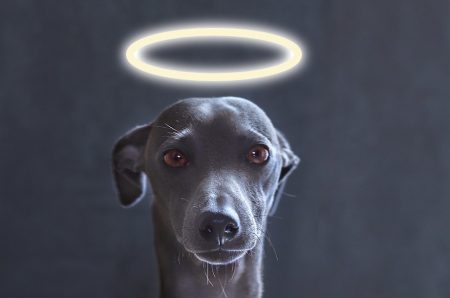
Yafur is an example of an animal accompanying a holy figure, but some animals became holy themselves. One of them is Saint Guinefort, who was a greyhound.
According to legend, a knight left Guinefort to guard his infant son in his cradle while the knight went hunting. When he returned, however, he found the cradle tipped over and Guinefort’s mouth covered in blood.
Thinking the dog had eaten his son, the knight drew his sword and killed Guinefort. Just then, he heard the baby crying. The knight found his son in the fallen cradle — alongside the dead body of a viper that Guinefort had fought and killed.
Struck with guilt, the knight buried Guinefort in an abandoned well and built a shrine around it. Eventually, locals began to worship Guinefort as the guardian saint of children, and his cult only died out in the mid-20th century.
1) The Cat of Shillourokambos

The Cat of Shillourokambos was a roughly eight-month-old kitten, whose body was discovered in a grave in Cyprus. We don’t know what the cat’s name was or if it ever did anything important in its brief life.
So what’s the big deal?
The Shillourokambos cat is estimated to be roughly 10,000 years old. That makes this kitten the oldest known domesticated cat in human history.
Additionally, the cat must have been important to the person buried in the grave. Its body was carefully positioned in the same fetal position as its master’s and the two were placed to face each other.
It’s likely the cat was killed to be buried with its owner. That seems cruel to us, but the ancient Cypriots likely did it so the buried person and their beloved kitty could be together for all eternity.