
- Even the biggest can fail.
Some companies are so hugely successful that you sometimes forget they’re, you know, businesses. Names like McDonald’s, Apple, or Coca-Cola are so ubiquitous that they sometimes seem more like forces of nature.
But what each of those companies has in common is that despite their success, they’ve failed miserably at some point. Practically each of the biggest, most successful companies on the planet has released products that lost them ridiculous amounts of money.
Now, a failed product can turn into a success — but that’s not the case here. Here are seven products of otherwise successful businesses that were atrocious failures.
7. Bic For Her Pens
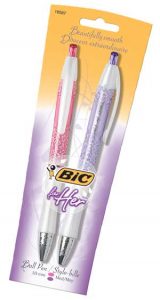
Disposable razors, pens, lighters… If it’s cheap and made of plastic, it probably carries the Bic logo.
In 2012, however, Bic decided that their normal pens that stop working after three uses weren’t attracting female consumers in sufficient numbers. So, the firm released the Bic For Her line — a series of pens in feminine pastel colors.
We’re sure Bic marketing managers were shocked when nobody bought the pens. Not only that, they were relentlessly ridiculed on the internet at the time.
It turned out that the ladies didn’t want to pay more for cheap, crappy pens just because they were a soft pink. They had no issues writing with regular ballpoint pens.
6. Google Glass
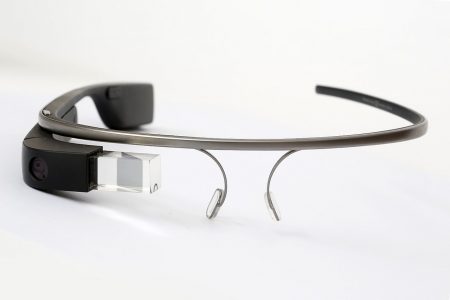
While people were mocking the Bic For Her pens, the tech corners of the internet were buzzing about Google Glass. This augmented reality device, released in 2012, was supposed to revolutionize the way we use technology.
Considering we’ve never even seen these things in the wild, it didn’t.
Google Glass was essentially a small display you were supposed to wear in front of your eyes constantly. With the Glass, you could interact electronically with everything around you.
As it turned out, however, nobody really wanted to do that — especially when the Glass cost a whopping $1,500. Additionally, people were concerned about Google siphoning (even more) of their private information, the thing was riddled with bugs, and a lot of places banned wearing the Glass since it could be used to record sneaky videos.
5. R.J. Reynolds Premier Smokeless Cigarettes
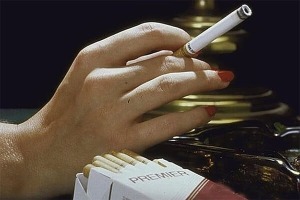
R.J. Reynolds might not be a household name, but as the second-largest tobacco company in America, they’re definitely successful. That’s not thanks to the Premier smokeless cigarettes, released in 1988.
In the late ‘80s, people started waking up to the fact that smoking is bad for you. So, R.J. Reynolds launched the Premier cigarette, which contained no regular tobacco.
Instead, the cigarette had a small amount of highly processed tobacco and some flavor beads or crystals. They were marketed as producing minimal smoke and tar, making them “healthier” than regular cigarettes.
Smokers, however, rejected the Premier brand. They reportedly didn’t light up very well and when they did, they tasted — and we quote a Japanese market study — “like s***.”
4. McDonald’s Arch Deluxe
The year was 1996 and McDonald’s wanted to shed its reputation of serving crappy food mainly for kids. So, they released the Arch Deluxe — a more “sophisticated” burger for more adult tastes.
The Golden Arches wanted to make sure they got it right, though. So, McDonald’s spent $300 million (nearly $550 million in today’s money) on research, product development, and marketing to ensure the Arch Deluxe’s success.
They failed.
On the surface, there’s nothing wrong with the Arch Deluxe. It had a quarter-pound patty, bacon, lettuce, tomato, cheese, onions, ketchup, and a Dijon-mayonnaise sauce.
Yet, nobody wanted to eat it due to its (at the time) high price. Today, the Arch Deluxe stands as one of the most commercially disastrous product flops of all time.
3. Apple Pippin
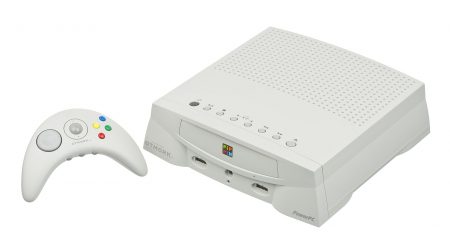
Did you know that Apple once made a game console? You probably didn’t because it was a horrendous failure that died within 12 months.
The Apple Pippin, developed with Japanese tech company Bandai, was released in 1996. It was supposed to bring together a game console and full-fledged personal computer, ready for internet use.
Apple, however, completely blew its market research. Neither Japanese nor American consumers knew what they were supposed to do with the thing.
It turned out that console gamers at the time didn’t really want a PC in their console, while PC users found the console format awkward at best. Add to that the Pippin’s pathetic performance and high price, and it’s no wonder Apple never became a big game console manufacturer.
2. Samsung Galaxy Note 7
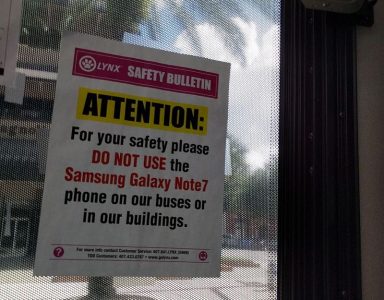
Samsung released the Galaxy Note 7 to big fanfare in 2016. It was the Korean tech giant’s flagship device at the time, bridging the gap between a smartphone and a tablet.
Tech-wise, the Galaxy Note 7 was a decent device. There was just one itsy-bitsy problem with it.
It tended to explode.
The poorly designed batteries’ connectors were susceptible to bending, which caused them to short-circuit and overheat. The Galaxy Note 7 quickly became notorious for catching fire or straight-up blowing up.
As a result, Samsung was forced to recall the entire production of the Galaxy Note 7. The company later pushed through a software update that permanently disabled all Galaxy Note 7s that hadn’t been returned.
1. New Coke
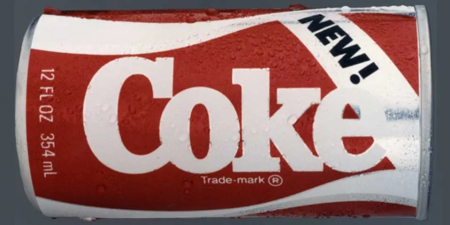
You can’t talk about product disasters without bringing up New Coke. This reformulation of Coca-Cola was the company’s attempt to catch up to its rival Pepsi, which was overtaking the Coca-Cola Company in the mid-80s.
New Coke was intended to taste more like Pepsi and initial taste tests suggested that people liked it. We’re not sure if the tasters lied or what happened, but upon release, nobody enjoyed New Coke.
In fact, people hated it. Within a couple of weeks of launching New Coke, the Coca-Cola Company had to return to its old formulation or people probably would’ve stopped drinking Coke altogether.
New Coke’s launch was such a spectacular failure that it has spawned a persistent conspiracy theory. Supposedly, the Coca-Cola Company intentionally launched a terrible-tasting drink to make people buy the old, classic Coke.
As far as conspiracy theories go, this one’s actually pretty plausible.