
- How long can war last? For a long time, it seems.
Even a single day of warfare is too long. Sadly, many wars go on for longer than that.
Much, much longer than that.
Many wars in human history have dragged on for years, decades, and even centuries. Such periods rarely see constant battle, instead consisting of a series of conflicts that inevitably lead from one to another.
Here’s a collection of seven incredibly long wars from human history. This isn’t an exhaustive top list — we simply picked ones that showcase just how long people are content to keep killing each other.
7. The Hundred Years’ War (116 Years)
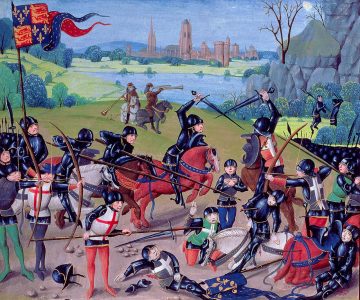
The Hundred Years’ War has a misleading name — the actual conflict lasted for 116 years. It also says something that it’s the shortest war on this list.
In any case, the Hundred Years’ War raged on between 1337 and 1453. It was just one of the dozens, if not hundreds, of conflicts between the kingdoms of England and France.
The war began with the English attempting to press their claim to the French throne. Over the years, the fighting expanded and drew in most of Europe’s great powers at the time.
In the end, France won. The French crown stayed with the French and the English lost 99.9% of their possessions in continental Europe, getting unceremoniously booted back onto their island.
6. The Mongol Invasion (131 Years)
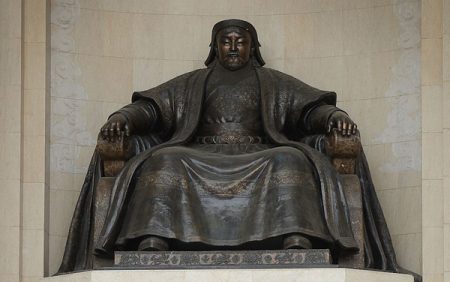
In 1602, a man called Temujin was elected the leader of the bickering Mongol clans, bringing them together under his new title — Genghis Khan. He kicked off a spree of invasions and conquests that continued until 1340.
Over the following 131 years, Genghis and his descendants pillaged, plundered, and raped their way through East Asia, the Middle East, and Eastern Europe, establishing the largest land empire known to man.
The Mongol invasion was also the second deadliest human event in history, losing only to World War II (if you don’t count the ensuing Black Death as part of the invasions). In other words, it was a pretty miserable time to be alive
5. Roman Conquest of the Iberian Peninsula (199 Years)
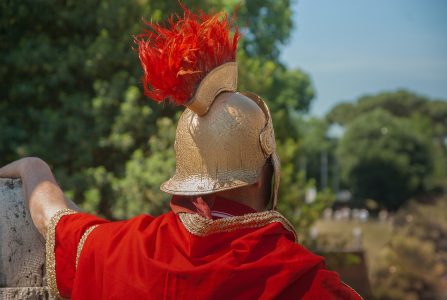
At the height of its power, the Roman Empire controlled much of Europe, from all the shores of the Mediterranean to the Middle East and the British Isles. But Rome wasn’t built in a day.
Case in point, it took the Romans just shy of 200 years to take over the Iberian Peninsula (that’s the area of Europe with Spain and Portugal). The conquest began in 218 BCE when Rome captured a handful of Carthaginian colonies.
The Iberian peoples put up a stiff fight, but in the end, they were no match to the might of Roman legions. Warfare on the peninsula finally ended in 19 BCE when Emperor Augustus (you know, Cleopatra’s boo thang) annexed it to the empire for good.
4. American Frontier Wars (315 Years)
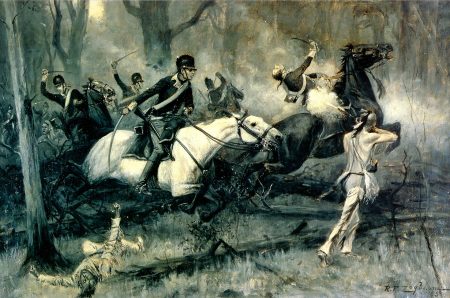
The American Frontier Wars, also called the American Indian Wars, are one of the darker chapters in U.S. history. Yet, they began before the U.S. was even a thing.
It’s hard to say exactly when this conflict began, since Native Americans were never exactly thrilled about Europeans coming over and grabbing their ancestral lands. Yet, the beginning of the Iroquois-French War in 1609 is often considered the spark that ignited the Frontier Wars.
When the English took over French territories in North America, they also inherited their conflicts with various Native Americans, adding them to the ones the English were fighting themselves. After the Revolutionary War, the newborn United States kept fighting with the Native Americans.
The Frontier Wars finally ended in 1924, when the last active Apache war band in U.S. territory was arrested.
3. Arab-Byzantine War (551 Years)
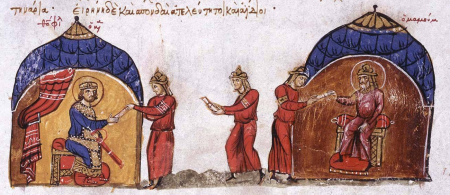
As the inheritor of the Western Roman Empire, the Byzantine Empire traditionally counted the Middle Eastern shores of the Mediterranean as its turf. But when the first Muslim Caliphates popped up in 629, it kicked off a violent rivalry that would last for more than half a millennium.
Over the years, emperors and caliphs came and went. With the political and military landscape of the area fluctuating with the times, these 500 years saw periods of both constant bloodshed and relative peace, although the latter would never last long.
The period of warfare finally ended around 1180. That wasn’t because the Byzantines and Arabs made peace with each other, though — they simply got too busy dealing with the invading Turks and later Mongols to keep slaughtering each other.
2. The Crusades (602 Years)
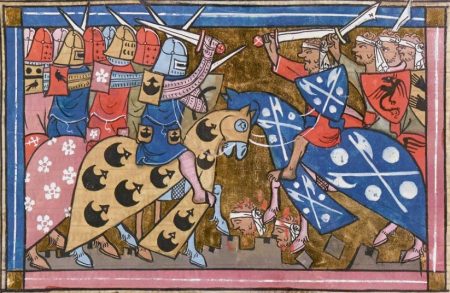
The period of the Crusades started in 1096, when Pope Urban II called all good Christians to go conquer Jerusalem from the invading Turkish Seljuk Empire. The success of that first Crusade resulted in many others, but not all were as triumphant.
Some Crusades, like the ill-fated Second Crusade, were miserable failures that only ended up fueling more conflict. As such, one invasion force after another sailed from Europe to the Holy Land, sometimes due to religious fervor, other times for money and power, and occasionally just to give knights something to kill.
It’s a bit difficult to say precisely when the Crusades ended. That said, 1699 is generally considered the year everyone had finally grown sick of crusading.
1. The Reconquista (774 Years)
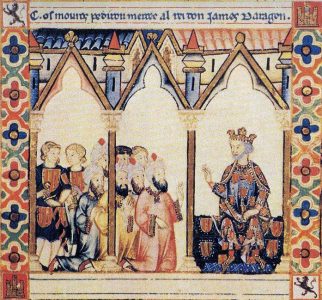
Between 711 and 719, the Umayyad Caliphate conquered most of the Iberian Peninsula (it didn’t take them nearly as long as it did the Romans). Yet, in 718 (or 720, it’s a bit murky) the Christian defenders scored their first victory against the invaders at the Battle of Covadonga.
That event is considered the beginning of the Reconquista. It would end up being the longest conflict in human history, lasting until 1492 when the Emirate of Granada surrendered to the recently unified Kingdom of Spain.
—-
If you’re interested in more weird wars from the past, check out our list of the shortest wars in history.