
- The last of the history of the big players in board games.
Parker (one of the big players) puts his own stamp on it, creating the now iconic playing pieces. Parkers rules were very clear after he revised them.
Monopoly became a phenomenon with 1.8 million sold and only because that’s all they could supply at the time. Darrow was thrust into the national spotlight.
But it turns out, the whole story is almost all a hoax. 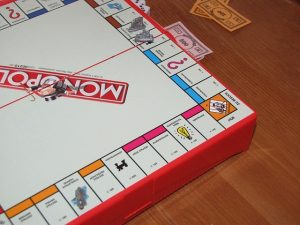
In 1936, Monopoly becomes a hit for Darrow and the Parker Brothers. It’s on its way to becoming the greatest selling board game of all time.
Monopoly was taken from a 30 year old game The Landlord Game. It was rejected by the Parkers. But Magies game was popular at college and grew during the summers.
The Landlord game had localized boards, depending on the city they lived in. New York had Broadway and Chicago had the loop.
It was in 1932 that Charles Darrow was introduced to a localized versions of The Landlords game at a dinner party. Friends suggested they play a game from Atlantic City, which had boardwalk and park place, just like the original Monopoly.
Lots of modifications were made to the look of the Landlord’s Game. However, the now iconic board has similar rules, four railroads, the same amount of spaces, utilities, and the go to jail card.
When Darrow sells the rights to Monopoly, they don’t patent it right away. It’s a patent examiners responsibility to search prior patents to see if anything comes up, which may not allow it.
After Monopoly is on the market, they go to file the patent. But there was already one in place for The Landlords game, from 1904 and another one from 1924. They decide to make a deal with Magie, instead of going against her as big players.
Parker goes to her to convince her to sell the patent. Magie agreed to sell the patent of his version of Monopoly as long as he would sell her original Landlord Game, exactly as she created it.
Darrow got a large lump sum and residuals to this day. She was paid about $500 dollars, with no residuals. There were 10,000 copies of Landlord Game but the anticapitalistic ideas were a bust.
In the end, the 10,000 copies that were made were all burned up. Monopoly’s success leaves Bradley in the dust for the next decade.
Marie Abbott came onto the game scene next, by taking pity on all the children around her also recovering from polio in a San Diego hospital. She wanted to cheer them up with a game so she created one and you only needed to know your colors to play! Candy Land was launched in 1949, has since sold 40 million copies and became the cornerstone of fun and colorful kids games.
These are the kinds of games that Bradley liked. They need another hit and they revive a 100 year old idea from Bradley himself, to do it.
By the late 1940s, games like Clue, Risk, and Sorry were hitting it out of the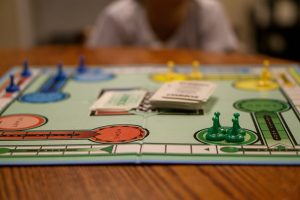 park for the Parker Brothers.
Monopoly continues to be number one and 1950s sales reached $13.5 million back then, or $150 million today.
Monopoly sets become a staple in American homes.
What do you think of the history of the big players in board games? Let me know in the comments if you want to see more articles like this.