
- We’ll all be plant food in the end, so might as well cut out the waiting period.
It’s not the first time we at Oddee are covering unusual, nature-oriented funeral practices. And in all fairness, we’ve even run a story on human composting before.
That said, it’s not every day that the country’s first human-composting funeral home opens its doors for business. Such an occasion definitely warrants giving the topic another look.
Recompose is a Seattle, Washington-based funeral home, and as you’ve probably already guessed, they don’t just bury your earthly remains in a wooden box. Instead, the company has developed a more environmentally-minded approach.
The company uses composting to dispose of their passed-on clients. After a month-long process, is good nutritious soil.
“Death is profound, momentous, and beyond our understanding. With an approach that is as practical as it is meaningful, Recompose connects the end of life to the natural world,” the company says on its website.
In fact, the firm has been pushing for human composting for quite a while. Recompose was instrumental for the passing of Washington’s 2019 law that legalized composting human corpses, reported The Optimist Daily.
Only, Recompose doesn’t call their process “composting.” Instead, they’ve opted for a more marketable – and slightly predictable – term “recomposition.”
“Recomposition offers an alternative to embalming and burial or cremation that is natural, safe, sustainable, and will result in significant savings in carbon emissions and land usage,” Katarina Spade, founder of Recompose, told Deutsche Welle.
“The idea of returning to nature so directly and being folded back into the cycle of life and death is actually pretty beautiful,” she added.
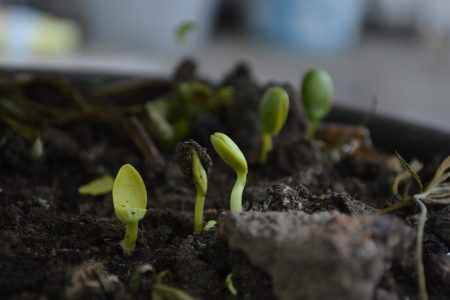
The Soil that Once was a Human
In addition to the market name recomposition, human composting is also known as natural organic reduction, or NOR for short. This is the scientific process fueling Recompose’s funerary practice.
“This is a very controlled process, completely driven by microbes. It’s fueled by plant material and monitored in a very rigorous way,” Spade told Seattle Times.
The process start when the body of the deceased is laid into what Recompose calls a “vessel.” It’s essentially a large tub filled with wood chips, alfalfa, and straw.
The vessel is part of a large, white honeycomb-like structure. Ten such vessels are currently operational, stacked on top of one another.
After the body is prepared, the vessel goes into the NOR structure. Over 30 days, microbes break down both the plant material and the corpse.
“Everything – including bones and teeth – is recomposed. That’s because our system creates the perfect environment for thermophilic microbes and beneficial bacteria to break everything down quite quickly,” Spade explained to DW.
The end result is a “nutrient-dense soil.” From one human body, NOR produces one cubic yard of… Let us call it “dearly departed material,” for a lack of a better term.
At this point of the process, the family of the deceased can claim the soil. Alternatively, they can donate it to ecological restoration projects – truly embodying the principle of earth to earth, ashes to ashes, dust to dust.
Saving the Planet, One Corpse at a Time
Spade began working on the concept that eventually became Recompose some 13 years ago. At the time, she was reflecting on her own mortality, despite only having lived to the ripe old age of 30.
Looking into potential burial options, Spade wasn’t happy with what she found. She considered traditional funerary practices to be too costly and wasteful.
She’s not necessarily wrong. A 2020 survey by People’s Memorial Association found that a complete funerary service could cost as much as $11,000 dollars, although the national average is around $5,000.
Compared to this, Recompose’s NOR burial is prices at slightly above average at $5,500. But it does come with some environmental benefits, claims Spade.
She told the BBC that NOR cuts carbon emissions by roughly 1.5 tons. That’s compared to a traditional burial where the body gets to decompose in the ground at its own pace.
In addition – like we already mentioned – the garden-variety soil that comes out of the process will foster new life. The great cycle goes on.
Pioneers in Death
Not everyone likes the idea of composting human corpses, though. According to DW, the Catholic Church, for one, finds the idea “undignified.”
“The Catholic Church believes that disposing human remains in such manner fails to show enough respect. The practice of burying the bodies … shows a greater esteem toward the deceased,” said Joseph Sprague, executive director of the Washington State Catholic Conference.
Still, people have already opted to get their remains composted. Recompose says they have “processed” bodies across the country, from sea to shining sea.
One of those bodies was once Paulie Bontrager, a vegan environmentalist. Her daughter, Charlotte, told Seattle Times that she had discussed the process with her mother while she still lived.
“We talked about how cool it was and why it took so long to get a service like this,” she said.
After her mother died two years later from an undetected lung condition, Charlotte contacted Recompose. She decided that her mother’s remains should be disposed of using the method she had found so fascinating.
Paulie Bontrager was among the first non-test bodies that were committed into Recompose’s NOR honeycomb on December 20, 2020.
“My mom was a very humble, loving person and would not want any kind of spotlight. But she’d be thrilled to know she was among this first group of pioneers,” Charlotte said.