
- Just one marbled crayfish can produce 700 fertilized eggs by itself.
- They destroy ecosystems around the world, and are notoriously hard to vanquish.
There’s some weird stuff going on in the world of invasive species and Europe. From our article about a mitten crab invading a woman’s home, you know that crustaceans get up to some hijinks in Central Europe. And you know invasive species are a serious problem, even in urban areas after our article about a man releasing a hundred eels into a Brooklyn lake. Now, crayfish are taking over a cemetery in Antwerp, Belgium.
Stop Letting Pets Go “Free”
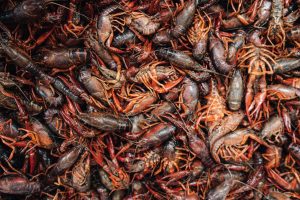
Scientists think someone released the crayfish from their home aquarium into a nearby stream. I don’t understand these types of people. A related saga just played out on Nextdoor in my neighborhood, with people spotting a guinea pig in an open space park. Is it people who don’t quite have the stomach for killing these animals themselves, so they just let nature do the work?
The guinea pig ended up okay. Someone trapped and adopted it. The little guy survived weeks surrounded by hawks and coyotes.

The crayfish ended up being more than okay as well. A single marbled crayfish lays 700 eggs and doesn’t require a partner for fertilization. The species reproduces asexually and creates genetically identical offspring. Beyond the single graveyard, marbled crayfish have taken over the world. You can find them from Michigan to Madagascar. They’re so hard to get rid of and propagate so fast that owning them is illegal.
Some communities try to poison marbled crayfish habitats in the area, such as ponds and streams. The preferred method is trapping (and then, I guess, killing), but it’s hard to do. If you miss even one, it takes no time at all for even a single crayfish to repopulate an area.
We Need A Crayfish Killing Hero
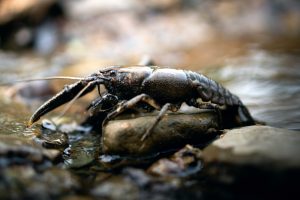
Because they’re genetically identical, they’re susceptible to disease, which could, theoretically, wipe out an entire population. So far, the crayfish haven’t encountered that kind of doomsday event. Instead, they eat everything in sight and burrow up to three feet into shores and river bottoms. They encourage erosion and devastate local flora and fauna.
Because of climate change, biodiversity is on the decline. Around the world, a planet once rife with unique species is sacrificing the survival of many for just six–humans and the five animals we eat. Invasive species add fuel to the fire of destruction. When a plant or animal who can propagate in huge numbers and consumes massive resources moves into an area, it diminishes other species’ ability to survive.
I’m not hoping that guinea pigs end up being an invasive species in my neighborhood, but at least it’d be a cuter takeover than crustaceans and eels.